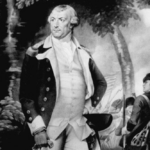
One of America’s Founding Fathers was Richard Henry Lee, who died this day on June 19, 1794 at the age of 62. A born-and-raised Virginian, Lee was a signer of the Declaration of Independence, a President of the Confederation Congress during the Revolutionary War, and a U.S. Senator from 1789 to 1792. We honor him today because of his major role in the formulation of our Declaration of Independence, and for his courageous efforts to persuade the Continental Congress to follow the lead of Virginia, which on May 15, 1776 had voted to approve a Resolution by which that state declared its independence from Great Britain.
Lee was born in 1732 in Westmoreland County, Virginia, a descendant of a long line of distinguished leaders of the Virginia Colony, dating back to Richard Lee I, who arrived in Virginia in 1639, and who served in the House of Burgesses off and on from 1647 to 1664; he died a wealthy man in 1664, leaving a wife and nine surviving children, including his son Richard Lee II, the great-great-grandfather of General Robert E. Lee.
Richard Henry Lee was educated in England, as was not uncommon among the sons of the monied classes in Virginia. After returning to Virginia in 1753, he began his political career in 1757 at the age of 25, serving as justice of the peace in his home county of Westmoreland. He quickly was elevated to the House of Burgesses, where he served for almost two decades, right up to the year 1776. He first became involved in rebellious activities after the end of the French and Indian War (1753-1763), when Great Britain imposed the infamous Stamp Act upon the American colonies. A decade before the Declaration of Independence, Lee was already a leader of a movement to challenge Parliament, just as colonists in Boston were organizing their own protests against British oppression. Lee became a primary leader of the movement in Virginia, working alongside better-known Virginia political activists such as Patrick Henry.
In the pivotal pre-war year of 1774, the 1st Continental Congress was formed, and Lee became a delegate. After the Revolutionary War commenced in April 1775, the 2nd Continental Congress was created, and again Lee was a delegate. By then he was a powerful and vocal advocate for independence. Shortly after Lee stepped down from the Virginia House of Burgesses, Virginia passed the May 15, 1776 Resolution mentioned above. Following passage of that precedent-setting document, on May 18 Lee sent a copy of the Resolution to John Adams, who was then an active leader of the debates over independence taking place in the 2nd Continental Congress in Philadelphia. Adams responded to Lee on June 4, congratulating him for the Virginia Colony’s passage of the Resolution, and saying that he intended to pursue a “similar” result in the Congress.
The Lee Resolution
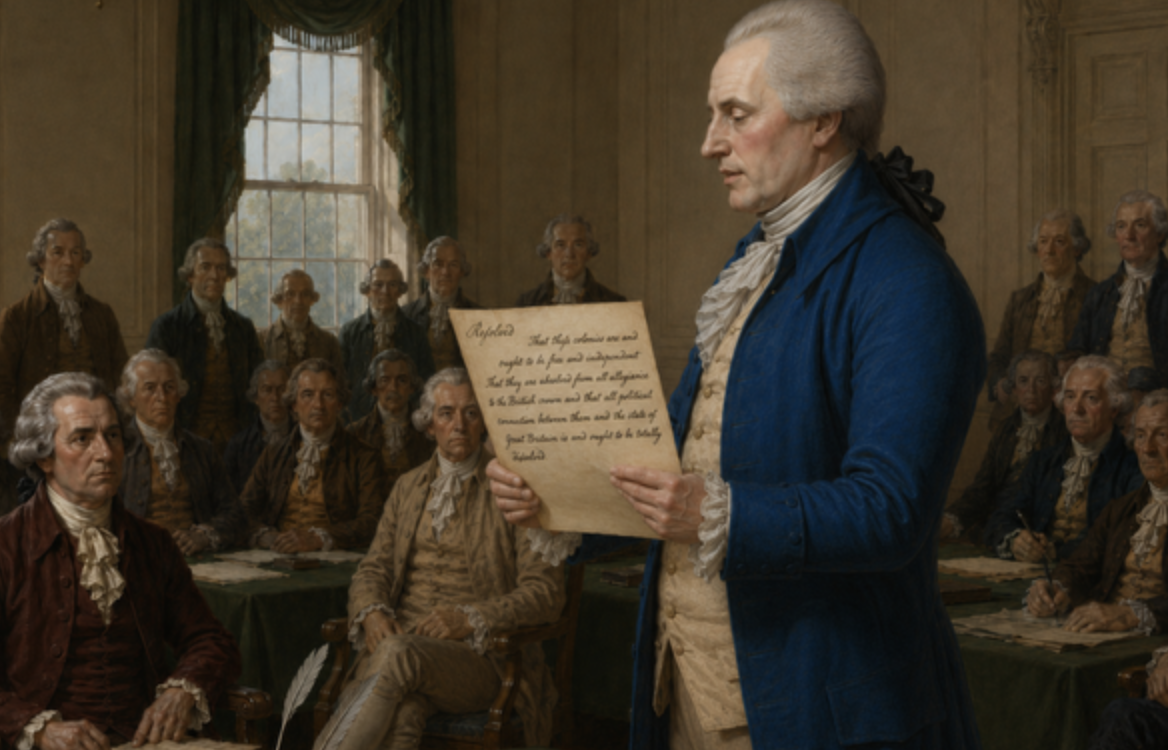
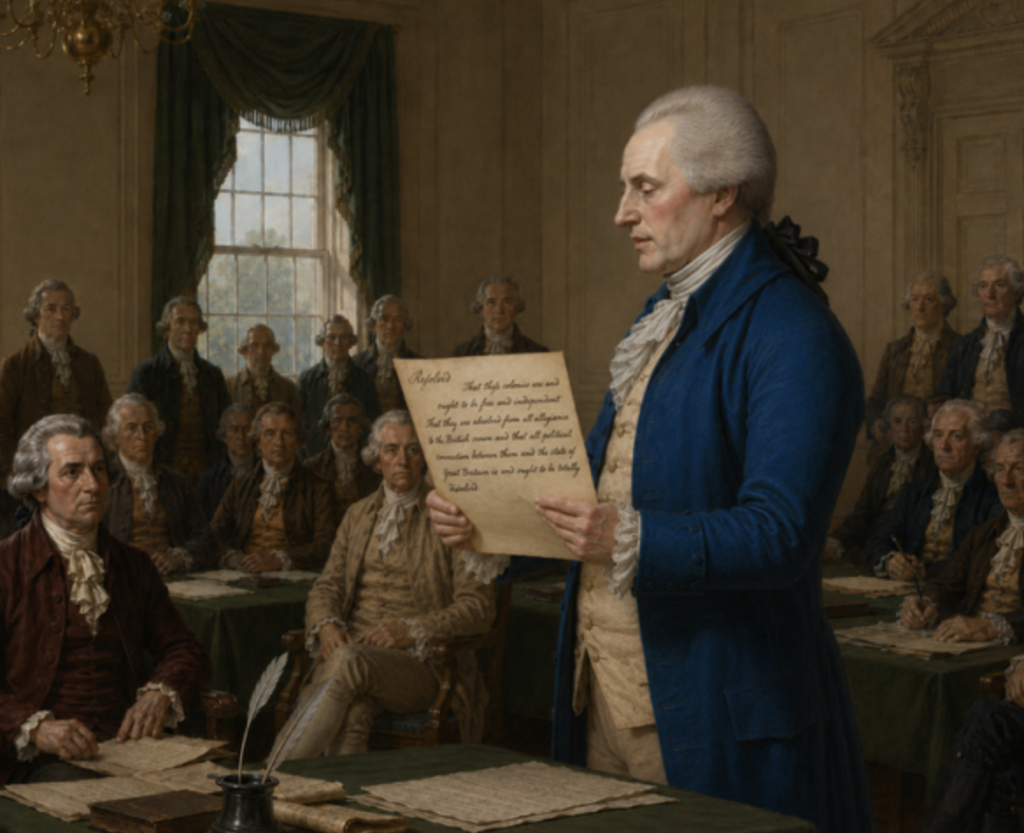
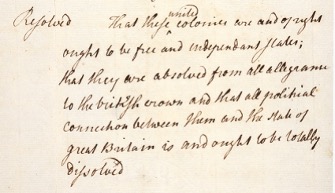
By June 7, Lee had made his way from Virginia to Philadelphia, and on that auspicious day, he introduced a Resolution that has come to be known as the “Lee Resolution.” It was short but to the point:
“Resolved, that these United Colonies are, and of right ought to be, free and independent States, that they are absolved from all allegiance to the British Crown, and that all political connection between them and the State of Great Britain is, and ought to be, totally dissolved.
That it is expedient forthwith to take the most effectual measures for forming foreign Alliances.
That a plan of confederation be prepared and transmitted to the respective Colonies for their consideration and approbation.
There it was: a proposed declaration of independence. The Colonial Williamsburg website offers its own commentary on what happened next: “Congress decided to stall. According to Jefferson, delegates from the middle colonies asked for time. They wanted to respond to ‘the voice of the people,’ and thought that while their colonies were ‘not yet ripe for bidding adieu to British connection but that they were fast ripening.’ A delay would allow their legislatures time to consider the issue and send their delegates instructions. While they tabled the official vote, Congress prepared for independence. They appointed a committee to draft the declaration. Much like the Lee resolution, and Washington’s appointment as commander-in-chief of the army, the role of principal author of the Declaration of Independence would go to a Virginian, the young Thomas Jefferson.”
Lee’s Legacy
In retrospect, it was the Lee Resolution that forced the issue, and called the question. Following the work of the “Committee of Five” to draft a Declaration of Independence and submit it to the Continental Congress, the deed was done: on June 28, 1776, the Declaration of Independence was approved (but not yet signed or published). Americans should pause here, and thank Richard Henry Lee for his critical role in bringing about the Declaration of Independence, just three weeks after his Resolution was introduced.
What of Lee’s later life? As mentioned above, he served in the U.S. Senate until just two years before his death. He resigned in 1792 due to his failing health. As Senator he had been directly involved in several major pieces of legislation, including the Land Ordinance of 1785.
While all this was transpiring, Lee was supporting an extended family, along with his third wife Anne (Gaskins) Lee, with whom he had seven children (five of whom survived to adulthood). Lee died at his home, Chantilly, in 1794, and was buried at Burnt House Fields at the Lee Family Estate at Coles Point, Westmoreland County. The site of his home is listed on the National Register of Historic Places. Today his life is commemorated with a number of statues and monuments in various locales, and an impressive painting of his likeness by Charles Wilson Peale now hangs in the National Portrait Gallery (and is copied above).
So today we honor the memory of Richard Henry Lee, a Founding Father whose major contributions to the cause of freedom should never be forgotten.