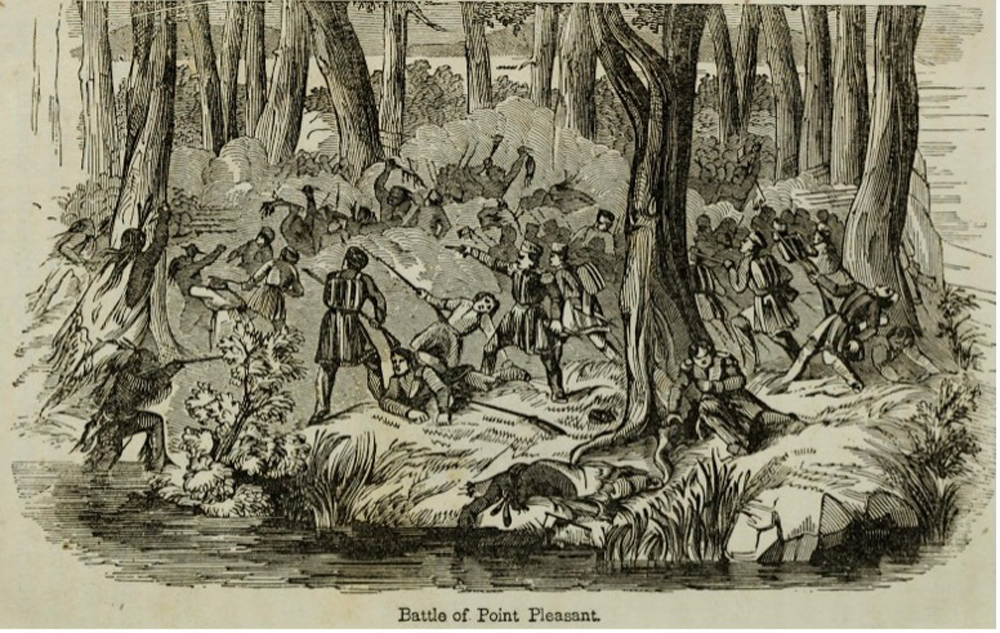
On this day in 1774, The Battle of Point Pleasant, also known as the Battle of Kanawha, was fought. It was a pivotal clash between colonial militia and Native American forces during Lord Dunmore’s War. John Murray, the 4th Earl of Dunmore, was the Colonial Governor of Virginia and in May 1774, ask for a declaration of war against the Shawnee and Mingo because of increased violence between expanding white settlers and the Shawnee who had historical hunting rights in the area. The conflict took place at the confluence of the Kanawha and Ohio Rivers in present-day West Virginia, where approximately 1,000 Virginia militiamen under Colonel Andrew Lewis faced a force of Shawnee, Mingo, and other allied tribes led by Shawnee Chief Cornstalk. The battle lasted for hours, with intense fighting in the dense woods along the riverbanks. Though the Native warriors fought with determination and skill, the colonists’ greater numbers and sustained pressure eventually forced them to retreat, giving the Virginians a decisive victory.
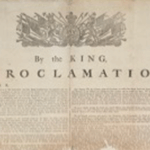
The outcome of the battle had far-reaching consequences. In the ensuing Treaty of Camp Charlotte, the Native Americans surrendered their hunting rights south of the Ohio and agreed to cease attacks upon travelers on the river and recognize the river, running nearly north–south at its eastern end, as the boundary between the Indigenous lands of the Ohio Country to the west, and the British colonies to the east. This was a major resetting of the Appalachian boundary defined by the Royal Proclamation of 1763 which ended the French and Indian War. Some historians also consider the Battle of Point Pleasant as the first battle of the American Revolution, since it occurred less than a year before the conflict at Lexington and Concord and shaped colonial military preparedness. Regardless of its classification, the battle was significant in expanding colonial control westward and foreshadowed the broader struggle for independence that would soon engulf the colonies.