
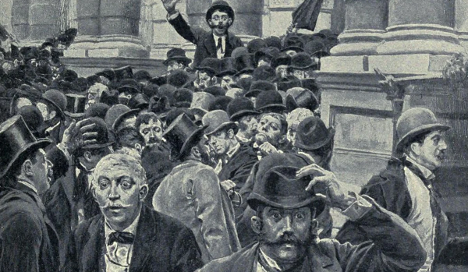
The Panic of 1837 was a major economic downturn that triggered a severe depression in the United States during the 19th century. It began with a collapse in financial markets, caused in part by speculative lending practices, a sudden drop in cotton prices, and restrictive lending policies from British banks. American banks had issued large amounts of paper money without sufficient gold and silver reserves, and when confidence declined, many institutions failed. The Specie Circular, a policy introduced under Andrew Jackson, also played a role by requiring payment for government land in hard currency, which drained specie from banks and tightened credit.
The consequences of the Panic were widespread and long-lasting. Businesses closed, unemployment rose sharply, and many Americans lost their savings as banks collapsed. The economic depression that followed lasted for several years, affecting both urban workers and rural farmers. It also had political repercussions, weakening the Democratic Party and contributing to the rise of the Whig Party. Overall, the Panic of 1837 exposed weaknesses in the nation’s financial system and highlighted the dangers of unregulated banking and economic speculation.
The aftermath of the Panic of 1837 also influenced future economic policy and debates about the role of government in regulating finance. During the presidency of Martin Van Buren, efforts were made to stabilize the economy through the creation of an independent treasury system, which aimed to separate government funds from private banks. Although recovery was slow, the crisis encouraged a more cautious approach to banking and credit in the following decades. It also shaped public attitudes toward economic risk, reinforcing the idea that rapid expansion and speculation could lead to devastating consequences if left unchecked.