Imagine a young woman who leaves her comfortable home and family life in New York and travels to the frontier territory of Northern Nevada in 1870, to seek out the explanation for her brother’s mysterious death in the lawless mining town of Virginia City. Then imagine she stays there for an entire decade before getting the answer, all the while keeping a careful and thoughtful diary of her day-to-day life in one of the most wild and raw mining towns of the Old West. This was the life of Mary Matilda Matthews, who died this day on May 15, 1903.
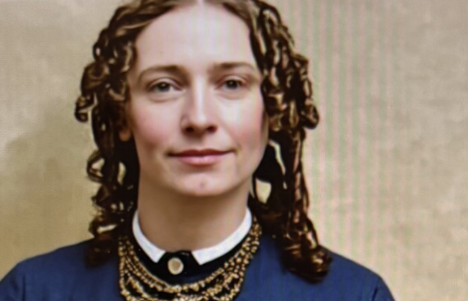
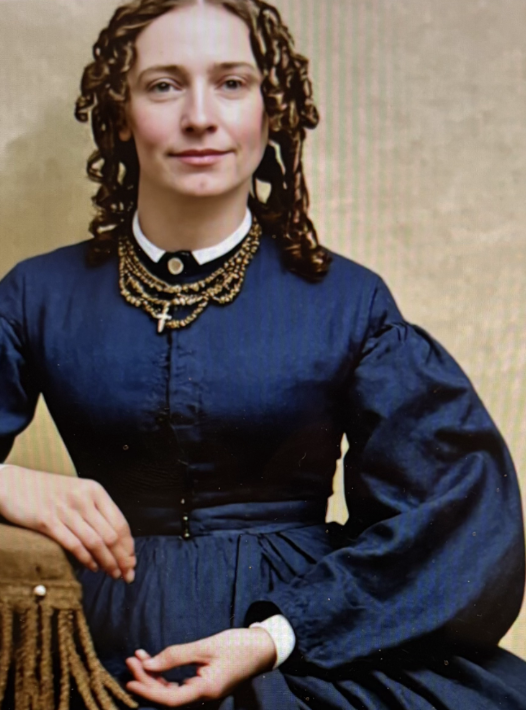
From the photograph that accompanies this story, what you see is a well put-together young woman, poised and confident. Indeed she was, and it was that confidence which allowed her not only to survive but to prosper in a town that saw more failure that success, more early deaths than long lives, more destitute miners than solid citizens, and way more saloons than churches.
Mary’s odyssey began with the news of her brother’s untimely death, with no information on how or why he died. Mary, a recent widow, was immediately concerned, and thought the circumstances were sufficiently suspicious that she started corresponding with a man who she was told was handling her deceased brother’s affairs. His evasiveness only increased her concerns. Mary convinced herself that she must travel to Virginia City to learn more, and hopefully settle her brother’s estate in an orderly way. She has been led to believe that her brother had had substantial assets, and yet the whereabout of those assets were obscure. Mary, at age 36, left Livingston County New York and headed west.
After a year of acclimating to the raw living conditions of Virginia City in the heyday of the Comstock Lode silver mining days, Mary settled in, and went to work sewing and cleaning for the wealthier families in town. As she achieved some measure of profit in those jobs, she managed to buy her own home, become a landlord, and make some shrewd investments in mining stocks. She was no stranger to risk-taking. While sometimes she needed to rely on others to save her from not having enough to eat, or to take care of the needs of her young son, in general she was a self-sufficient and proud member of the Virginia City community, and well respected. In New York, Mary had developed some of the business skills she later put to use in Virginia City.
Mary’s ten years in Nevada are vividly captured in her memoir, entitled “Ten Years in Nevada or Life on the Pacific Coast,” published in 1880. Besides telling her own story, Mary was a born story teller, and shared many tales about the townspeople of Virginia City and other nearby communities (Reno, Carson City, and Dayton, to name a few). She also wrote about the many dramatic events that unfolded in Virginia City during her time there: fires, mine collapses, diseases, lawlessness, gunfights, and the like.
We have yet to mention important and amazing fact: Mary experienced all this while raising a young son who travelled with her to Virginia City. Through all of the perils and pitfalls of life in Virginia City, Mary took the time to be a full-time mother, tending to her son’s needs, making sure he received a proper education (to the extent possible is a frontier mining town), and of course doing everything she could to see that her son was fed and clothed. Her strength of character shines through, as she recounts the hardships she encountered as a single parent.
What about her brother’s estate? Not to give away the end of the story, but towards the end of her ten-year stay in Virginia City, Mary did, in fact, discover that her brother had been killed, and learned who the killer was, and that he was living in her midst for part of the time she was in Virginia City. Mary could have gone to the sheriff and had the man arrested. But Mary chose to let it go—there was nothing to be accomplished, she concluded, by finding and turning the man in. And so she returned to New York in 1878, and published her memoir two years later. She went west again, and lived another twenty years after publishing her book. She died at the age of 69 on May 15, 1903. Little is known of her life in those final years—her memoir stopped in the year 1878– and for reasons unclear, her final resting place was Ukiah, California.
And so this day we honor the memory of Mary McNair Mathews, a courageous pioneer woman who left behind one of the most compelling first-person accounts of life in Virginia City at the heighth of the Comstock Lode silver mining boom of the 1870’s. We highly recommend her book, a powerful narrative of one woman’s journey of self-discovery in the old west. The Kindle version of her book is available on Amazon for $2.99.