Most Americans know that the battle that effectively ended the American Revolution was the Battle of Yorktown, pitting British General Cornwallis against General George Washington and his French counterpart, General Rochambeau.
There was no escape for Cornwallis and his troops, due in significant part to the ability of the French navy—America’s ally in the war—to blockade the entrance to Chesapeake Bay, which was Cornwallis’ only escape route, and the only route for British ships to come to Cornwallis’ rescue.
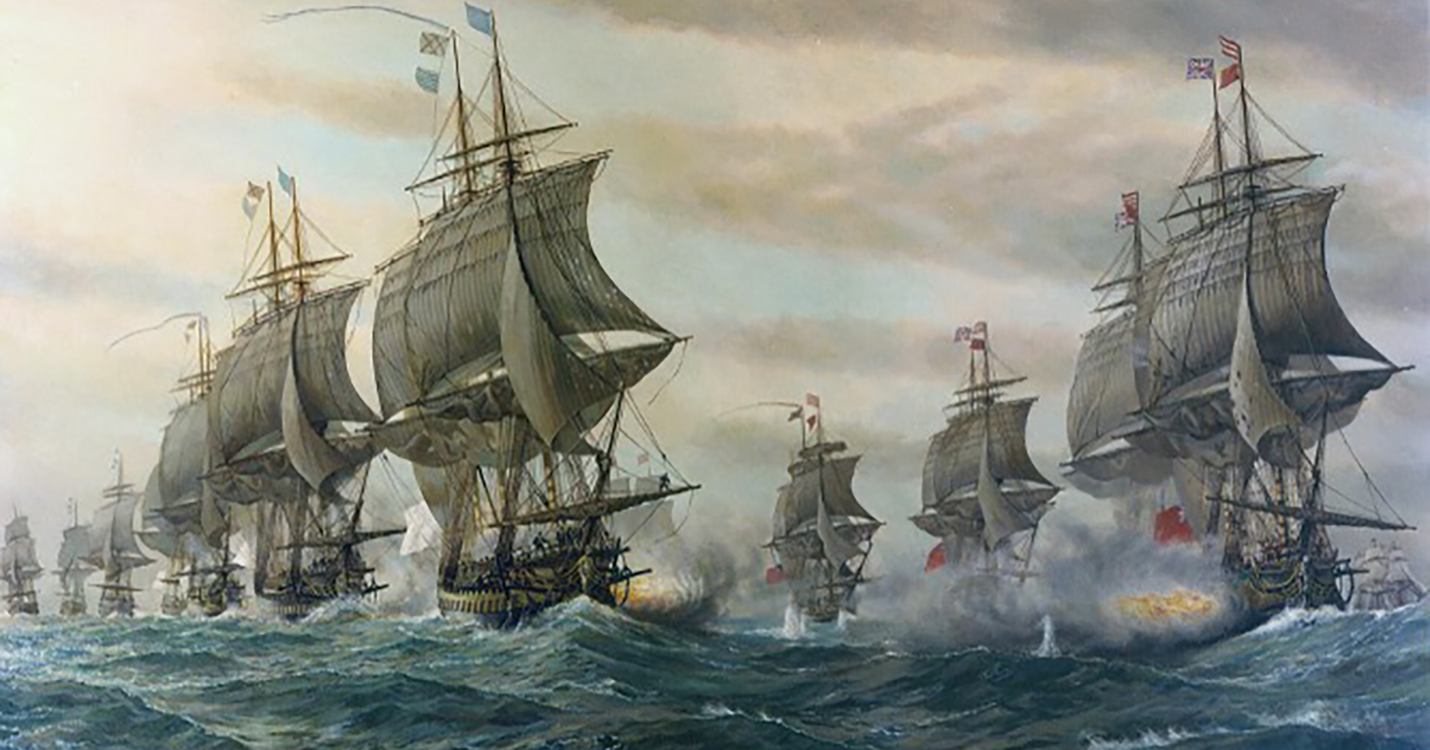
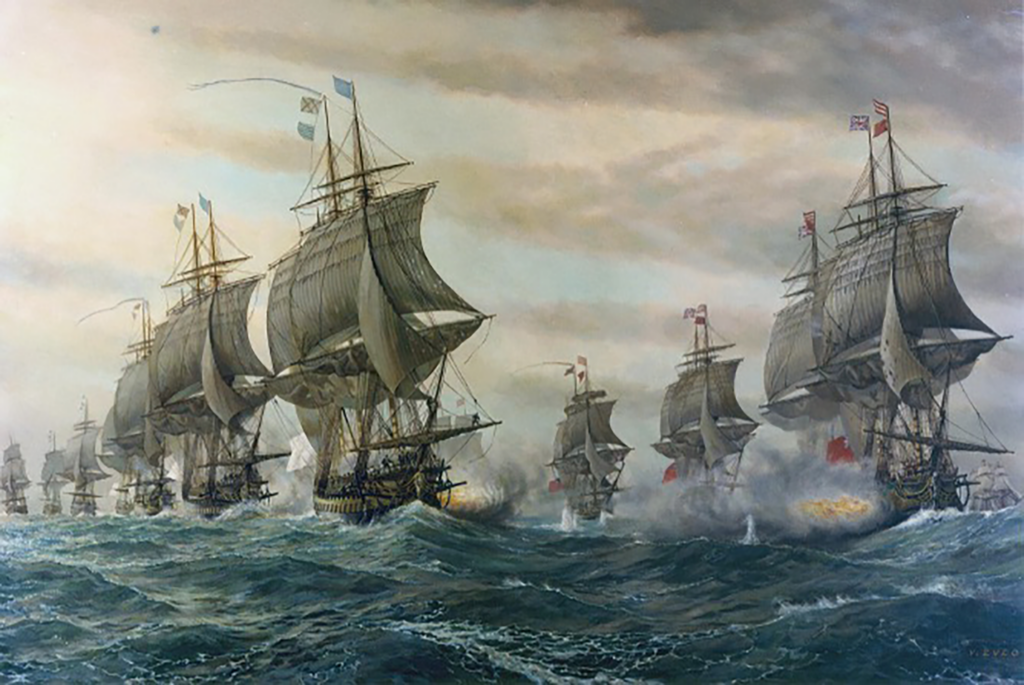
The momentous battle that preceded the Battle of Yorktown was actually fought on water: a furious sea battle between French and British ships. The French fleet was commanded by Francois Joseph Paul de Grasse, an experienced commander who had been responsible for a string of naval victories before arriving in North America. De Grasse had come to Virginia by way of the West Indies, arriving in late August ahead of the British, who had tarried in New York before setting sail to meet the enemy. The British fleet was commanded by 56-year old Rear-Admiral Thomas Graves, who many historians consider to have been a poor choice to lead the British navy into battle. He was a stickler for the rules of engagement, which ultimately was his downfall.
The two navies first caught sight of each other on September 5, 1781, when the British fleet approach Chesapeake Bay, only to find the French waiting for them. For the American & French allies, the overall battle plan had been carefully scripted: French & American troops were to meet at Yorktown simultaneously with the arrival of the French fleet, and they timed it perfectly. On the British side, Graves had grossly under-estimated the size of the French fleet, which was substantially larger than what British intelligence had told him to expect: the French had 24 ships of the line, with over 3,000 troops on board, while the British had only 19. As a result, the British were massively out-gunned, and it showed in the final toll of causalities: the British suffered almost 350 men killed or wounded, which the French had only 220 casualties. To this day, experts debate whether the British were defeated because of Grave’s poor tactical decisions during the battle (including sending mixed signals to his ships on which maneuvers to carry out), or the British were simply defeated by a superior force.
The engagement of the two navies lasted only a few hours, but the outcome would affect the entire course of the Revolutionary War. After experiencing severe damage to his ships, and loss of life, Graves retreated, and ultimately headed back to New York, never to come to the rescue of Cornwallis.
Graves’ return to New York on September 20 with news of the British defeat set off a round of recriminations—the “blame game” that often follows defeat. It was just days later that Commander in Chief General William Clinton belatedly received a plea from Lord Cornwallis for help. Writing on September 17, Cornwallis wrote: “if you cannot relive me very soon, you must be prepared to hear the worst.” And that’s what happened: the Siege of Yorktown commenced on September 28, and Cornwallis surrendered his army on October 17.
In retrospect, it was the Battle of the Chesapeake that truly secured victory for the Americans at Yorktown. Without de Grasse’s superb leadership, and his fleet’s excellent performance on the field of battle, the Battle of Yorktown might not even have happened. Cornwallis and his men might very well have been rescued, and lived to fight another day. And so today we give thanks to the French navy for all that it did to support the American cause.