When the French and Indian War ended in 1763, Great Britain emerged victorious and in possession of a vastly expanded North American empire. But victory created a new problem: what would happen to the enormous territory west of Britain’s established colonies?
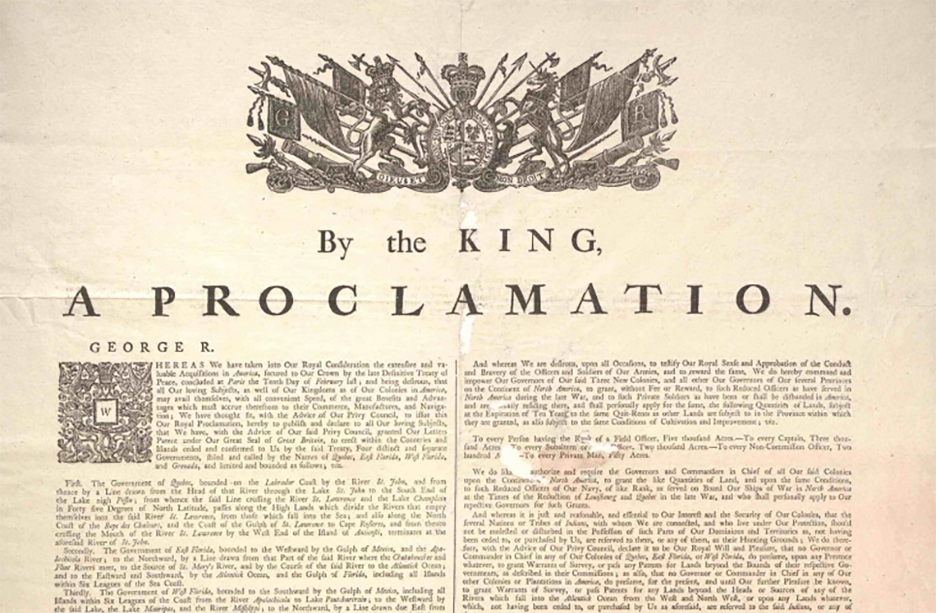
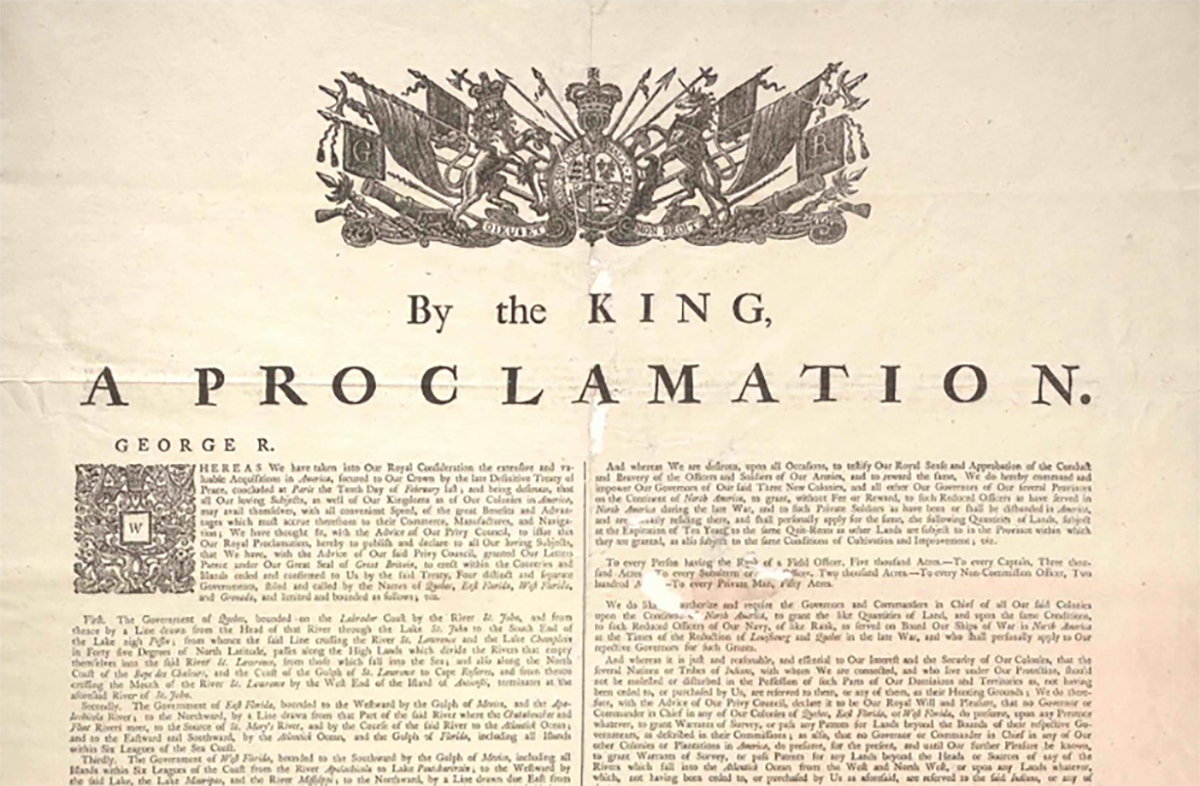
The answer came on October 7, 1763, when King George III issued the Royal Proclamation of 1763. Intended in part to stabilize Britain’s new territories and reduce conflict between colonists and Native nations, the proclamation established new rules for settlement and land acquisition in the West.
Instead, it became an early source of resentment between Great Britain and its American colonists and part of a much larger struggle over who controlled the future of North America.
A Changed North America
The Treaty of Paris, signed in February 1763, ended the Seven Years’ War, known in North America as the French and Indian War. France surrendered most of its North American territorial claims, dramatically expanding the lands claimed by the British Empire.
But those lands were not empty. Numerous Native nations lived throughout the Great Lakes, Ohio Valley, and other regions that Britain now claimed as part of its empire. The peace agreement between European powers did not extinguish Native sovereignty or resolve competing claims to the land.
Relations quickly deteriorated. Native nations in the Great Lakes and Ohio Country resisted British policies, military occupation, and increasing colonial encroachment in a conflict commonly known as Pontiac’s War. British officials faced the prospect of another expensive frontier war almost immediately after concluding the last one.
The British government responded by attempting to bring order to its western frontier.
Drawing the Proclamation Line
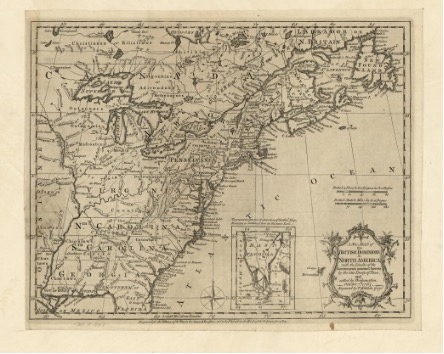
The Royal Proclamation established a boundary generally following the Appalachian Mountains. Colonial governors were prohibited from granting lands beyond the line, and British subjects were restricted from settling on lands reserved for Native peoples. The proclamation also ordered settlers already living in prohibited areas to withdraw.
Just as importantly, individual colonists and private companies could not simply purchase western lands directly from Native nations. Such land transactions were to take place through the Crown.
For British officials, the policy served several purposes. Limiting western settlement could reduce clashes between settlers and Native peoples, make Britain’s enormous new territory easier to administer, and help prevent another costly conflict. The proclamation also reorganized portions of Britain’s expanded empire, establishing or redefining governments including Quebec, East Florida, and West Florida.
The boundary was never intended to be an immovable permanent border. British officials expected western boundaries to change through future negotiations. But many American colonists did not see the proclamation as a reasonable temporary measure. Instead, they saw a closed door.
Why Colonists Objected
For years, colonists had looked westward for land and economic opportunity. Veterans of the French and Indian War had been promised western lands for their service. Wealthy speculators had invested in western land claims. Other settlers simply intended to move across the mountains and establish farms of their own.
Britain’s victory over France seemed as though it should make those opportunities easier to pursue. Instead, the Crown restricted access.
George Washington was among the prominent Virginians with a personal financial interest in western land. Like other landowners and speculators, he viewed the proclamation as a temporary obstacle rather than a permanent prohibition and continued pursuing western claims as later treaties shifted the boundaries open to colonial settlement.
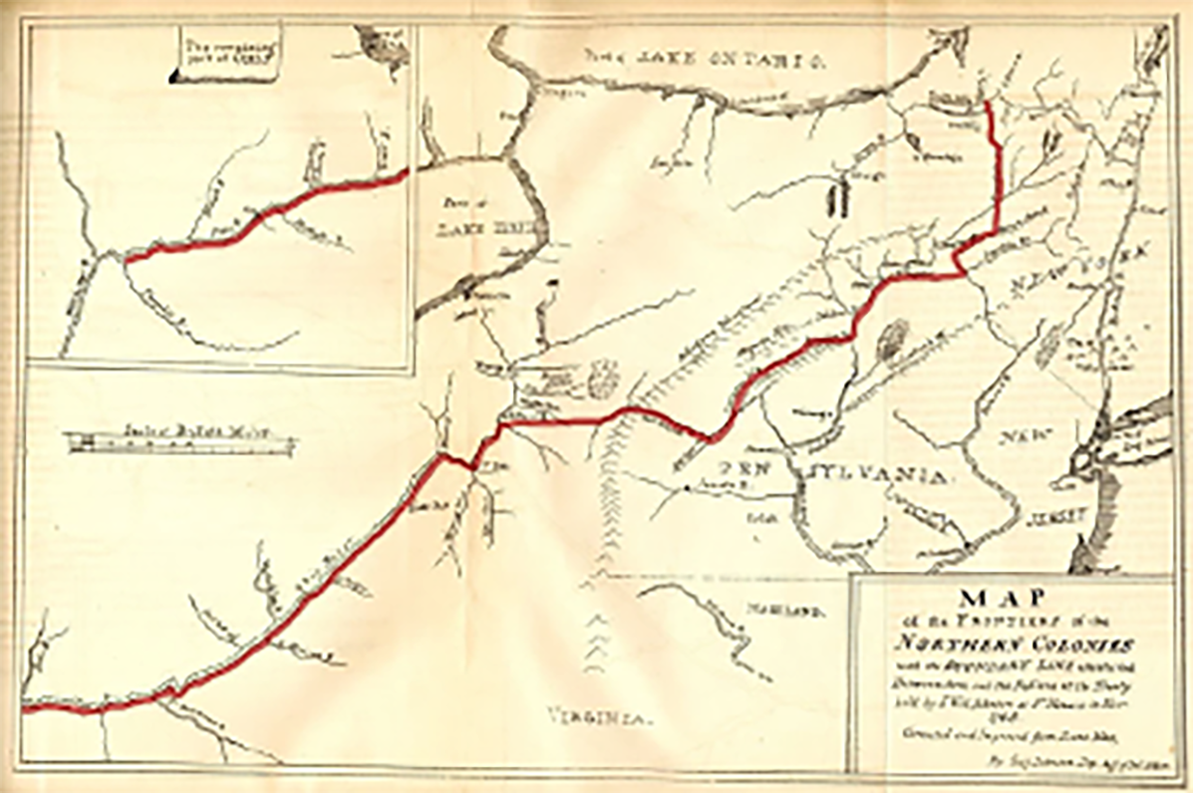
Nor did ordinary settlement simply stop. Colonists continued crossing the boundary, while land companies and colonial leaders pressed the British government for access to additional territory. Later agreements, including the 1768 Treaty of Fort Stanwix and the 1770 Treaty of Lochaber, moved portions of the boundary farther west.
The result was an increasingly complicated contest among the British government, colonists seeking western land, and Native nations attempting to protect their homelands and political independence.
From Imperial Policy to Revolutionary Grievance
The Proclamation of 1763 did not cause the American Revolution. But it arrived at the beginning of a decade in which the relationship between Britain and its American colonies changed dramatically.
The Seven Years’ War had left Britain with significant debt and a much larger empire to administer. British officials increasingly sought to exercise greater control over the colonies and make them bear more of the costs of imperial defense. The proclamation was followed by measures including the Sugar Act, Stamp Act, Townshend Acts, and eventually the policies that colonists denounced as the Intolerable Acts.
Each dispute had its own causes, but together they contributed to a growing argument over authority: How much power did Parliament and the Crown have over Britain’s American colonies? Western land became part of that argument.
To many colonists, the proclamation represented unwanted British interference with their economic ambitions and ability to settle new lands. To British officials, managing western settlement was a practical necessity of governing an empire. And for Native nations, the stakes were more fundamental: colonial expansion threatened lands they already occupied and considered their own.
Those competing interests would not disappear with American independence.
A Legacy Beyond the Revolution
The American Revolution ultimately ended British authority over the thirteen colonies, and the 1783 Treaty of Paris established a new United States whose claimed territory extended west to the Mississippi River. But independence did not resolve the central problem the Proclamation of 1763 had attempted to manage.
American settlers continued moving west. Native nations continued defending their lands and sovereignty. And the new United States government soon found itself trying to regulate settlement, trade, and land acquisition in Indian Country.
The federal government adopted policies that in some respects echoed the earlier British system. The Indian Trade and Intercourse Act of 1790, for example, placed significant federal controls on trade and land transactions involving Native nations. Meanwhile, American expansion continued to push farther west, producing new treaties, land cessions, forced removals, and armed conflicts throughout the following century.
The Proclamation of 1763 occupies an important place in early American history. It was an attempt by Britain to manage the enormous consequences of its victory in the French and Indian War. It contributed to colonial resentment during the years leading up to the revolution. And it exposed a conflict over western land and Native sovereignty that would continue long after British rule ended.
The line drawn in 1763 did not stop westward expansion. But the questions behind it – who could claim land, who could sell it, and who had the authority to decide – would shape American history for generations.
Images
Cover: Royal Proclamation of 1763, issued by King George III, October 7, 1763. Library and Archives Canada, e010778430. Public domain.
Map: Thomas Kitchin, A New Map of the British Dominions in North America; with the Limits of the Governments Annexed Thereto by the Late Treaty of Peace, and Settled by Proclamation, October 7th, 1763. Library of Congress, Geography and Map Division.
Map: Guy Johnson, Map of the Frontiers of the Northern Colonies with the Boundary Line Established Between Them and the Indians at the Treaty Held by Sir William Johnson at Fort Stanwix in November 1768, 1768. National Archives of the United Kingdom; reproduced by the National Park Service.
Further Reading
National Park Service — Teaching American Indian History with Primary Sources
Library of Congress — British Reforms and Colonial Resistance, 1763–1766
George Washington’s Mount Vernon — Proclamation Line of 1763
Colin G. Calloway, The Scratch of a Pen: 1763 and the Transformation of North America, Oxford University Press, 2006/2007.
Eugene M. Del Papa, The Royal Proclamation of 1763: Its Effect upon Virginia Land Companies, Virginia Magazine of History and Biography, October 1975
Jack M. Sosin, Whitehall and the Wilderness: The Middle West in British Colonial Policy, 1760-1775. University of Nebraska Press, 1961.