Today we commemorate the birth of Virginia Dare, the first English child born in North America, who came into this world on August 18, 1587. Virginia, her parents, and her fellow settlers of the Roanoke Colony have all become mythic figures, because over 430 years ago, they simply disappeared from the colony they had established, known today at “the Lost Colony of Roanoke.” Hundreds of years later, experts continue to debate what became of these people. In the meantime, Virginia has become a symbol, and her story continues to intrigue us.
Background:
The First Expedition. On March 25, 1584, Sir Walter Raleigh received a charter from Queen Elizabeth to found such a colony, and he quickly assembled the ships and crew to undertake an expedition to locate a favorable spot on the coast of North America to plant a colony. Indeed, the first voyage was launched the following month, under the command of Captains Amadas and Barlowe. The expedition first caught sight of land in July 1584, and discovered what came to be called “Roanoke Island.” The captains and crew carefully scrutinized this potential site for a colony, and returned to England with two Algonquin Indians in tow, and gave their report to Sir Raleigh and the other adventurers who had funded the expedition.
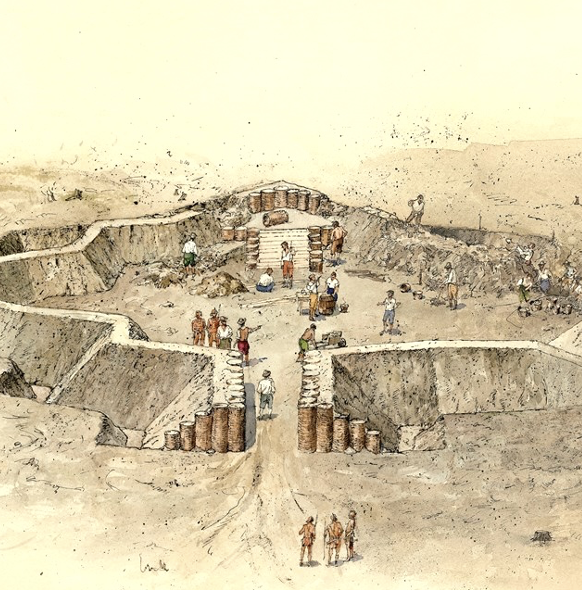
The Second Expedition. Based on the initial reports from Captain Amadas, the following year a second expedition was mounted, this time with seven ships, passengers, and enough provisions to sustain a colony. After their arrival at Roanoke Island, a contingent of men under the command of Sir Richard Grenville returned to England for more supplies. By September, a settlement had been built that would withstand the upcoming winter weather. But the settlers encountered severe challenges, and when a passing ship arrived in 1586, most of them chose to return to England. Only three men were left behind to man the fort they had built. A drawing of the fort is shown below. The foundations of the fort, believed to be someone on the grounds of Ft. Raleigh on Roanoke Island, have yet to be located, much less excavated.
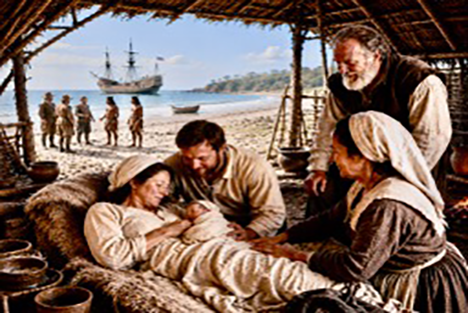
The Third Expedition. The third expedition was by far the most well-executed, and included a number of men, women and children who were expected to remain and establish a permanent settlement. They arrived in 1587, and in August of that year, Virginia Dare was born, the first English child born in North America.
Virginia Dare’s Disappearance:
We know very little about Virginia Dare, but this much we know: she was born to Ananias Dare, a bricklayer in London, and Eleanor White, the daughter of John White, who would later become the governor of the Roanoke Colony. Virginia’s parents had met and married in London. A few months after Virginia’s birth in Roanoke, her grandfather John White returned to England for more provisions, never to return before Virginia and her family members disappeared, along with the rest of the settlers, numbering over 100 souls. John White finally returned to Roanoke Island in 1590, by which time the settlement had been abandoned. Virginia would have been no more than 3 years old when she and her parents vanished.
The disappearance of the Roanoke settlers is shrouded in mystery, and many theories have been advanced as to what happened to them. Perhaps they were attacked, and fled for their lives (although there are no skeletal remains where the fort once stood that would suggest that a violent encounter took place). Perhaps they voluntarily left the Island in search of provisions, and assimilated into one of the Native-American tribes. Perhaps they moved inland, only to be killed or captured in a remote site that has yet to be discovered. There is no strong evidence supporting any of these theories, and so historians and scientists continue to speculate.
Virginia Dare’s Mythic Status
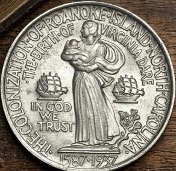
We don’t know if Virginia grew to womanhood. We don’t know what she looked like. We don’t know if she ever had children. We don’t know when and where she died. Yet we honor her today in countless ways. A number of ships are named after her. The U.S. mint issued a commemorative coin in 1937 in her honor (see photo at the bottom of this story). She is a character in countless book, stories, television shows, and movies. Her fame is outsized, to be sure, given what little we know about the three-year-old girl who vanished along with her parents so many centuries ago.
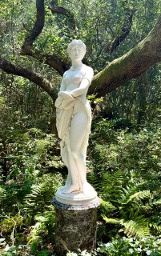
One of the more controversial commemorations to Virginia Dare is a nude statue of her, created in Spain, depicting her as a voluptuous adult woman. The sculptor had convinced himself that Virginia had indeed grown up, and had become a beautiful young woman. The statue found its way to America, and is now displayed in the Elizabethan Garden on Roanoke Island, after years of hand-wringing by certain high-placed American women who objected to the sculpture being publicly displayed because of Virginia’s nudity. Yet it’s a beautiful sculpture:
A final testament to Virginia’s enduring fame is that the U.S. Mint issued a commemorative coin in her honor in 1937, the 350th anniversary of her birth. It’s a beautiful coin, and stands as yet another example of Virginia’s mythic status in American history:
And so today we honor the memory of Virginia Dare, on the anniversary of her birth in August 1587.
Recommended Reading
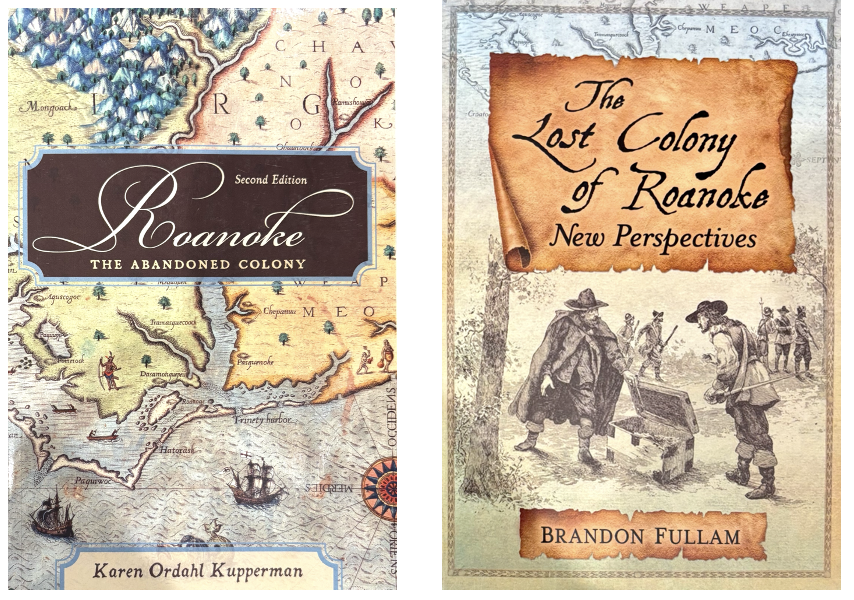
Many books and articles have been written about the Lost Colony of Roanoke, but we recommend two of them here. Both books examine the evidence and offer their views on what happened, and how to explain the settlers’ disappearance. No doubt their works will not end the debate, and the mystery of Roanoke may never be solved.