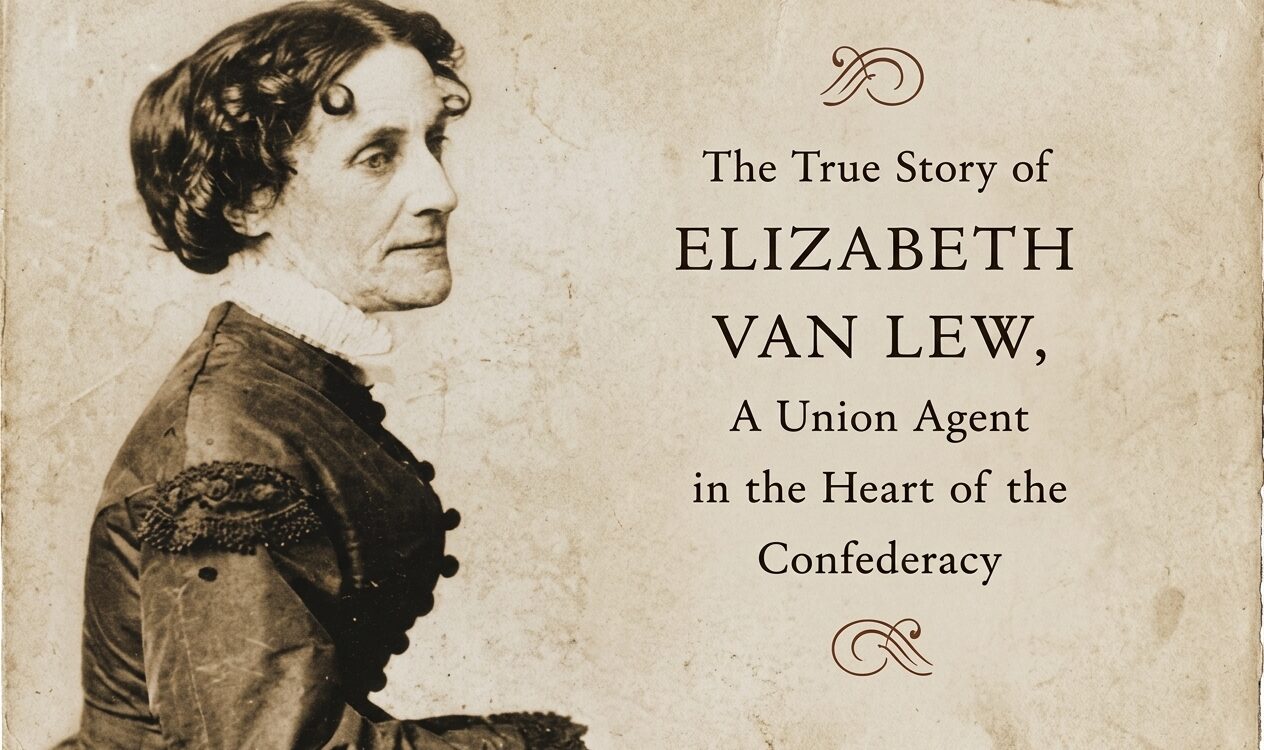
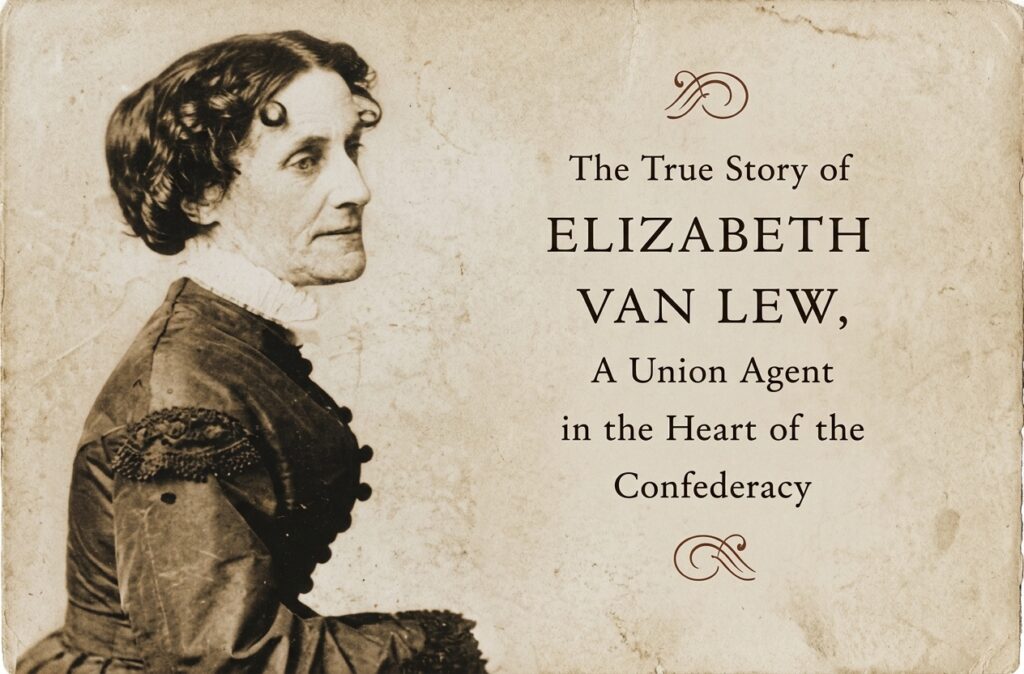
In the divided world of Civil War Richmond, where loyalty to the Confederacy was expected and dissent was dangerous, one woman quietly built one of the most effective espionage networks of the entire conflict. Elizabeth Van Lew, born October 12, 1818, into a wealthy Richmond family with Northern roots, became the Union’s eyes and ears inside the Confederate capital — a role requiring extraordinary courage, ingenuity, and moral conviction.
A Moral Compass Formed Early
Educated at a Quaker school in Philadelphia, Van Lew developed strong anti-slavery views that set her apart from much of Richmond society. After her father’s death, she and her mother freed several enslaved people in their household and helped others secure wages and partial freedom — a radical act in a city increasingly committed to secession.
After her father’s death in 1843, she and her mother freed some of the family’s enslaved workers and helped others gain wages and partial freedom.
These convictions shaped her wartime choices. When the Civil War erupted, Van Lew stayed in Richmond but refused to abandon her loyalty to the Union.
Building a Spy Ring in Plain Sight
Operating under the guise of a harmless, eccentric socialite, Van Lew organized a covert network of both white and African American operatives. Together, they funneled intelligence on troop movements, fortifications, and Confederate plans to Union commanders.
Her work often centered on Libby Prison, where she visited Union captives under the pretense of charity — delivering food and clothing while quietly gathering military information. She even hid escaped prisoners in a secret room in her home, shielding them from Confederate authorities.
Mary Bowser: The Spy Inside the Confederate White House
One of Van Lew’s greatest assets was Mary Bowser, a formerly enslaved woman whom Van Lew had educated in the North. Bowser infiltrated the Confederate White House as a domestic servant, using her extraordinary memory to absorb sensitive information from Jefferson Davis’s inner circle. She passed this intelligence to Van Lew, who relayed it to Union forces.
To survive, both women cultivated reputations of being scatterbrained or mentally unstable — a calculated performance that allowed them to operate beneath suspicion.
Impact on the War
Van Lew’s intelligence contributed to several Union operations, including the attempted Libby Prison raid in 1864. Her network also recovered and protected the body of Colonel Ulric Dahlgren after a failed Union raid, preventing Confederate citizens from desecrating it.
Her use of invisible ink, coded messages, and innovative courier methods earned her a reputation as one of the most skilled spymasters of the war.
After the Guns Fell Silent
Following the Union victory, President Ulysses S. Grant appointed Van Lew postmaster of Richmond — a remarkable recognition of her wartime service. Yet her loyalty to the Union had cost her dearly: her family fortune was depleted, and Richmond society never forgave her.
She lived out her final years largely ostracized, passing away on September 25, 1900. Despite her wartime heroism, her Unionist activities had cost her family fortune and social standing in Richmond. She died on September 25, 1900, leaving behind a legacy as one of the most effective and daring spies of the Civil War.
Legacy
Elizabeth Van Lew’s story is a testament to the power of conviction and the hidden influence of women in wartime intelligence. Operating in the very heart of the Confederacy, she proved that courage often works best in silence — and that one determined individual can alter the course of history.
Further Reading
- Abbott, Karen (2014). Liar, Temptress, Soldier, Spy: Four Women Undercover in the Civil War. HarperCollins. ISBN 9780062092892. OCLC 878667621.
- Kane, Harnett T. Spies for the Blue and Gray. Garden City, N.Y.: Hanover House, 1954. ISBN 978-0385014649. OCLC 476276.
- Ryan, David D. A Yankee Spy in Richmond: The Civil War Diary of “Crazy Bet” Van Lew. Mechanicsburg, PA: Stackpole Books, 1996. ISBN 0-8117-0554-4.
- Tsui, Bonnie. She Went to the Field: Women Soldiers of the Civil War. Guilford, CT: TwoDot, 2006. ISBN 0762743840.
- Varon, Elizabeth. Southern Lady, Yankee Spy: The True Story of Elizabeth Van Lew, A Union Agent in the Heart of the Confederacy. New York: Oxford University Press, 2003. ISBN 0-19-517989-7.