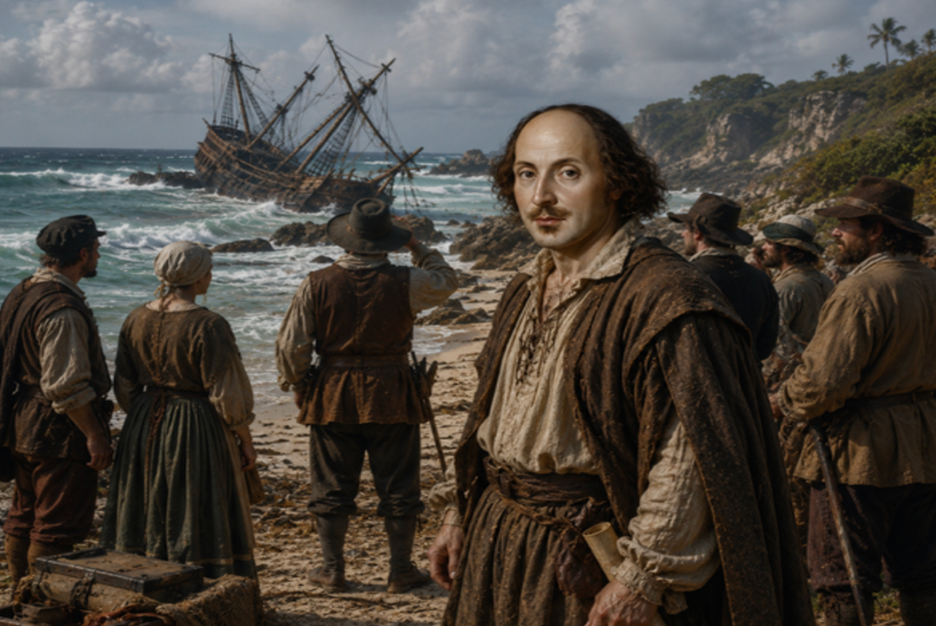
The man many historians credit as being one of the most reliable first-person chroniclers of the early days of the Jamestowne Colony was William Strachey, who was buried at St. Giles’ Church in Camberwell, England on this day on August 16, 1621.
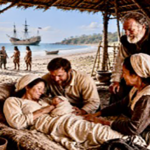
Strachey was one of the passengers on the Sea Venture, a vessel that was part of a fleet of ships that sailed to Virginia in 1609, but the Sea Venture was separated from the fleet during a violent storm and was shipwrecked off the coast of the island of Bermuda. Strachey’s story of the shipwreck, and of the survivors’ struggle to survive, has gone down in history as one of the most vivid accounts about the early explorations of North America.
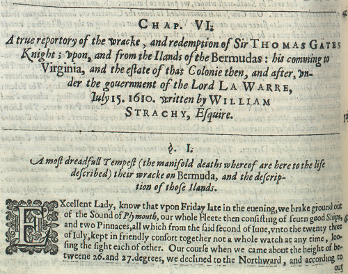
When the survivors of the shipwreck finally made their way to the Jamestown Colony in the spring of 1610, Strachey almost immediately wrote about their nine-month ordeal and sent his account to an “Excellent Lady” in England. The letter, dated July 15, 1610, was ultimately published in 1625, under the title of “A True Reportory of the Wracke, and Redemption of Sir Thomas Gates, Knight.” His account is said to have formed the basis for one of Shakespeare’s greatest plays, The Tempest.
“A True Reportory” was not Strachey’s first literary endeavor. In fact, his writing career began in 1605, when he published his first sonnet when he was 33 years old. He became a theatre-goer, and ultimately became part-owner of the Blackfriars Theatre in London. He also became friends with a number of noted authors such as John Donne and Ben Johnson. In 1609 he became an investor in the Virginia Company, and that same year boarded the Sea Venture and sailed to North America. He did not stay long in Virginia, and he is believed to have returned to England in late 1611.
Strachey authored one other major account of the Jametowne Colony, which was written in about 1612, but not published until 1849. Entitled “The Historie of Travalie Into Virginia Britannia,” it was a critical account of conditions in the Colony, and was therefore suppressed from publication. Today, historians praise his works as some of the most important first-hand accounts of life in the Virginia Colony in its first decade. He died in poverty in August 1621, but he left a lasting legacy.