Founded in 1902, the town of Goldfield, Nevada experienced a meteoric rise over the next five years to become a center of the mining industry In the United States. By the winter of 1907, Goldfield stood at the height of its power—Nevada’s richest mining camp, a boomtown of electric lights, saloons, and fortunes made overnight. But beneath the prosperity ran a fault line: a struggle between radical labor and rising corporate might. When that tension finally snapped, it produced one of the most consequential labor showdowns in Western mining history.
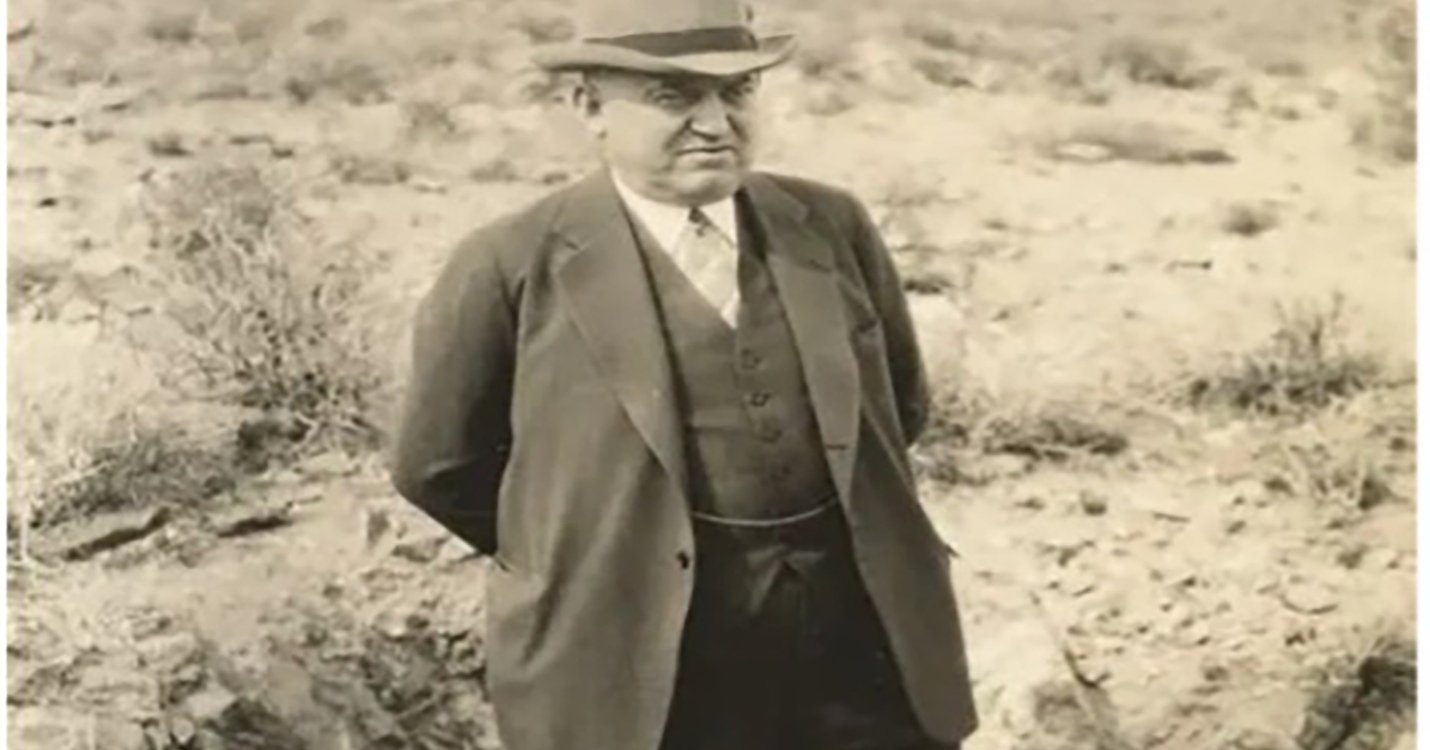
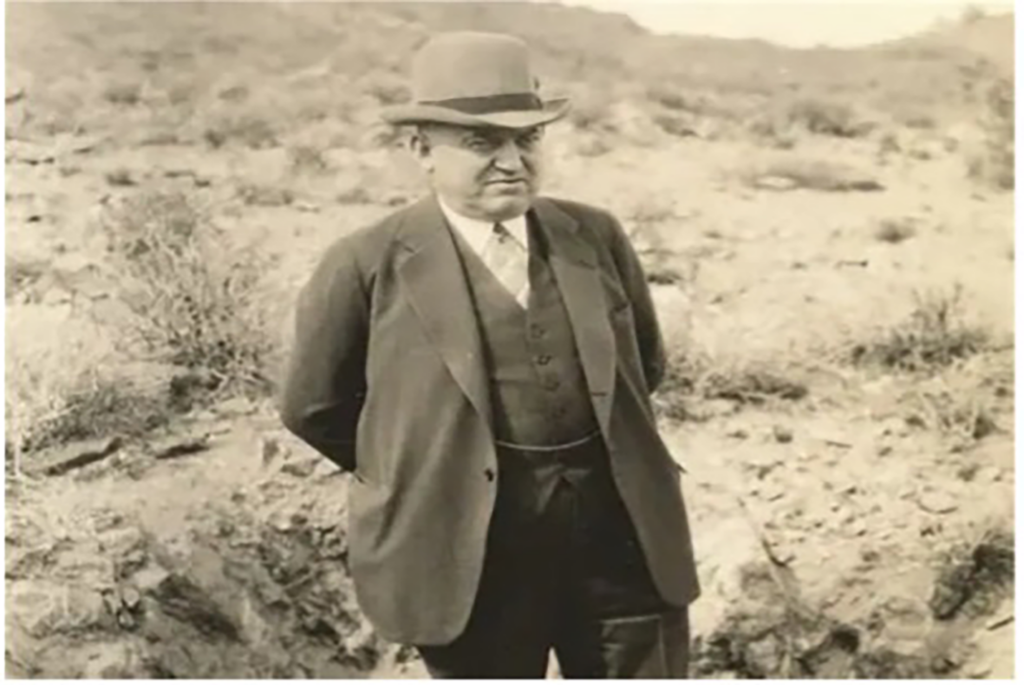
At the center of the storm was George Wingfield, a young gambler‑turned‑business magnate whose influence would soon stretch across the entire state. Born 150 years ago on August 16, 1876, Wingfield was still in his 30’s when he rose to power.
A Town on Edge
Despite the fact that the Goldfield Mine was highly profitable—or perhaps because of that– by the end of 1907, tensions at the Goldfield Mine were rising from simmering to boiling. The Western Federation of Miners (WFM)—aligned with the Industrial Workers of the World—had organized nearly every trade in town. Bartenders, teamsters, faro dealers, and miners all belonged to the union. For a brief moment, Goldfield was the IWW’s strongest foothold anywhere in America. Wingfield, meanwhile, had consolidated the district’s major mines into the Goldfield Consolidated Mines Company, giving him near‑total control over production. He was not a man who shared power lightly.
December 4–6, 1907: The Walkout
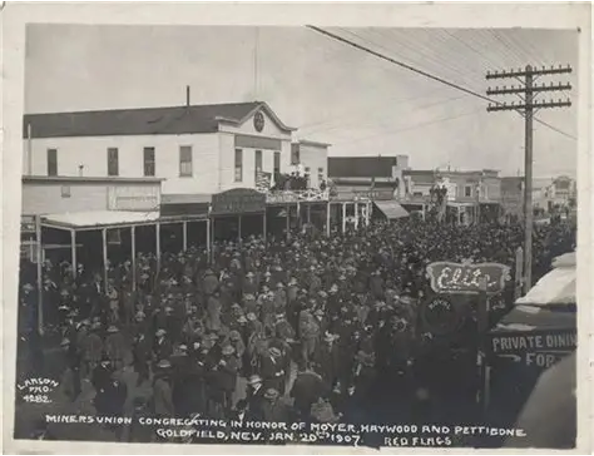
On December 4, Wingfield’s company announced changes to wage scales and payment systems. The miners saw it as a direct challenge to union authority. By December 5, crews across the district walked off the job. On December 6, the WFM declared a full strike. Overnight, over 6,000 workers were out of work, and Goldfield’s mines went silent.
Wingfield did not flinch.
December 7–10: Wingfield Makes His Move
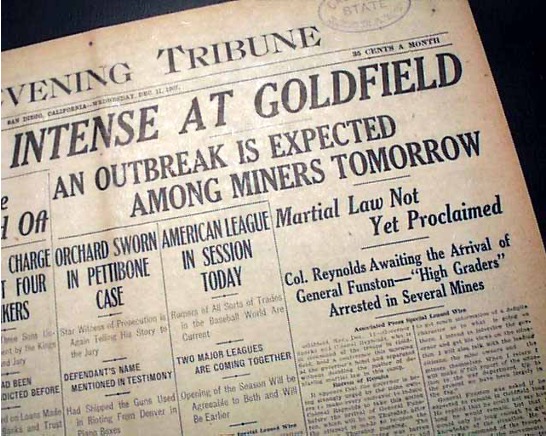
Beginning December 7, Wingfield and Nevada Senator George Nixon sent urgent telegrams to Washington, warning President Theodore Roosevelt of potential violence and “radical elements” in Goldfield. Whether the danger was real or strategically exaggerated remains debated, but the effect was unmistakable.
On December 10, federal troops—Company K of the 22nd Infantry—marched into Goldfield. Their arrival changed everything. The union’s leverage evaporated the moment soldiers appeared on Main Street.
December 15: Reinforcements Arrive
A second detachment arrived on December 15, placing Goldfield under full military occupation. The strike was still technically active, but its outcome was already decided. Wingfield now held the upper hand, backed by federal authority.
December 17–20: Wingfield Beats Back the WFM
Between December 17 and December 20, Wingfield reopened the mines under new conditions:
- No “closed shop” ; union membership not required
- No union hiring hall
- Lower wages
- Full managerial control over hiring and operations
The Union protested, but with troops guarding the shafts, resistance was symbolic at best. By Christmas, the strike had collapsed.
The Aftermath: Nevada Transformed
The Goldfield strike did more than break a union—it reshaped Nevada’s political and economic landscape. The defeat of the WFM was “gold” for Wingfield, and led to several systemic changes in the business community. For example, after the defeat of the WFM Nevada created its first State Police to ensure future labor disputes never required federal troops. Naturally, investors viewed this and other changes very positively. The business world saw the Nevada mining industry as having become more stable, which in turn accelerated the pace of development across the state. As for Wingfield, he emerged as Nevada’s dominant economic force, soon controlling banks, mines, and political alliances.
Some hailed Wingfield as the man who saved Nevada mining from radicalism. Others saw him as the architect of labor’s defeat, and the equivalent of a “robber baron.” Either way, his victory in “Wingfield’s War” marked a turning point. The Goldfield mines never regained their former prominence, but the legacy of the winter of 1907—Wingfield’s winter—echoed through Nevada for decades.