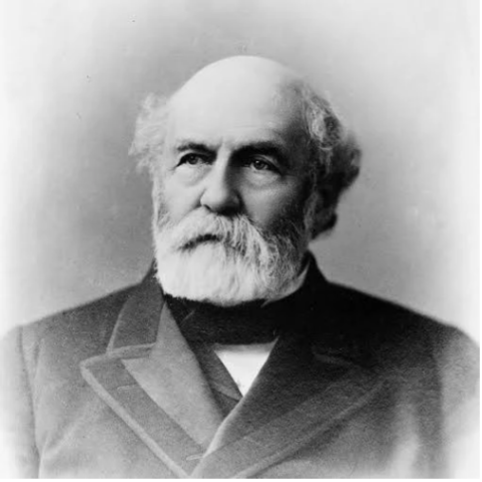
Collis P. Huntington was an important American businessman and railroad leader during the 1800s – one of the “Big Four” tycoons of the western railroad industry. He was born in 1821 in Harwinton, Connecticut, and later moved west during the California Gold Rush. Huntington became involved in business and eventually helped build the Central Pacific Railroad, which connected California with the rest of the country. His work on the railroad made him a wealthy and influential figure.
Huntington played a major role in the development of the American West. As one of the leaders of the Central Pacific Railroad, he helped complete the first transcontinental railroad in 1869. The railroad made it easier for people and goods to travel across the country and helped many western communities grow. However, Huntington and the other railroad leaders were also criticized for their enormous wealth and political influence. From his base in Washington, Huntington was a lobbyist for the Central Pacific and the Southern Pacific in the 1870s and 1880s. The Big Four had built a powerful political machine, which he had a large role in running. He provided considerable bribes to numerous politicians and congressmen. Revelation of his misdeeds in 1883 made him one of the most hated railroad men in the country.
Collis Huntington died on this day in 1900, but his legacy continued long after his death. He is remembered for helping transform transportation and business in the United States, especially in California. At the same time, his life shows how the growth of railroads created both opportunities and conflicts during the country’s expansion. Huntington remains an important historical figure because of the lasting impact his work had on American transportation and development.