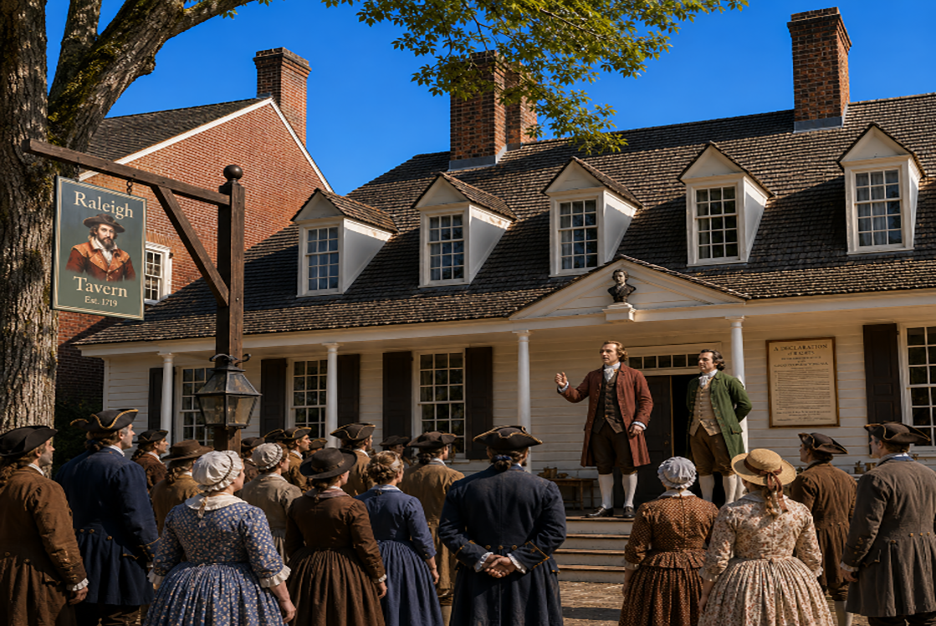
While most Americans know that the Declaration of Independence was approved by the Continental Congress in July 1776 in Philadelphia, the story about how the news of that momentous event was spread to the rest of the world is less well known. Several recent books have covered this subject, and have carefully tracked how the news travelled north and south to the colonists living in the thirteen former colonies that now constituted the “United States.” The news usually took two forms: public readings of the actual text of the Declaration, and newspapers or broadsides that published the text, or excerpts of the text. What is most interesting is how long it took for this news to make its way to the newly independence citizens of the thirteen states— painfully slow, that is, because of the rudimentary conditions of the roads connecting Philadelphia to Boston, New York, and other major population centers.
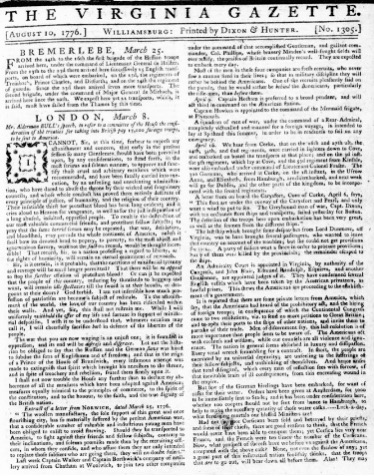
A key example of the slow spread of the news of the Declaration comes from the State of Virginia, the state that was home to several Founding Fathers who played major roles in the creation of the Declaration: Thomas Jefferson, George Mason, and Richard Henry Lee in particular. Although Virginia was by far the most powerful state in the new United States, it did not receive the news until almost three weeks later, as is apparent from reading the July 20 issue of the Virginia Gazette, one of the leading newspapers in the State, which printed the entirety of the Declaration in that issue. Then, in the August 27 issue, it was announced that on July 25, “the instant Declaration of Independence of the United Colonies was proclaimed here [Williamsburg], and received with universal applause, under a discharge of cannon, firing of small arms, illuminations in the evening, etc.” Oddly, it took event longer for the news to be proclaimed in Richmond Virginia, arguably closer to Philadelphia than Williamsburg, but not proclaiming the news earlier than Williamsburg. When Richmond did announce the news, the August 10 issue of the Gazette reported that “on Monday last, being court day, the Declaration of Independence was publicly proclaimed in the town of Richmond, before a large crowd of respectable freeholders of Henrico County. It was received with universal shouts of joy.”
The August 10 Gazette could not help but take a moment to reflect upon the importance of the Declaration, in poetic fashion. It wrote: “Now will America’s sons her fame increase. In arms and science, with glory, honour and peace.”
Knowing that the news from Philadelphia was momentous, the Virginia Council announced on July 20 that in addition to the public reading of the Declaration, “the two printers (in Williamsburg) publish in their respective gazettes the Declaration of Independence, made in the Honorable Continental Congress, and that the sheriff of each county in this Commonwealth proclaim the same at the door of the courthouse, this first court day after he shall have received the same.”
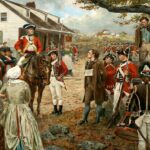
One can only imagine the scene: long-oppressed colonists hearing for the first time that they are now citizens of a new country, the United States of America!
Note: the Colonial Williamsburg Foundation has taken steps in the last year to digitize and make available to the public several important collections of historical records, including a collection of issue of the Virginia Gazette. This important historical newspaper is available to read for free.
To review the collection, and to access all of the Colonial Williamsburg other important collections, click here.