We tend not to think of our Pilgrim ancestors as violent people, and for the most part they weren’t. There were exceptions, however, in the case of John Billington is one of them. We share his story with you today, the anniversary of his death by hanging on September 30, 1630.
According to Mayflower historian Robert Charles Anderson, John Billington came from Lincolnshire, England, where he may have been born. Very little is known about him before he became a passenger on the Mayflower on its voyage to North America in 1620. Billington possibly was recruited to join the Pilgrims by Robert Cushman, one of the leaders of the Pilgrim Separatists, who came to Plymouth on the second ship to arrive there, the Fortune in 1621. William Bradford thought Billington had come from London; how Billington might have met Cushman is unclear. Whatever the case, Billington became one of the male passengers who signed the famous Mayflower Compact, and for that single act alone his is remembered today.
Billington was not a Separatist, and while he and his family were part of the Plymouth community, and lived at various times with the Warren and Hopkins families, the family unit was not well liked. Almost immediately, just a month after the Pilgrims arrived at Plymouth, Billington’s son got into trouble for setting a fire that endangered several newly-built structures. Whether the fire was accidental or intentional, it did not endear the family to their neighbors.
By 1621, animosities had increased, and in March of that year Billington let loose in a public tirade against Myles Standish, for which he was punished by having his neck and heels tied together, “but upon humbling himself, and craving pardon, and it being his first offense, he is forgiven.” As Robert Charles Anderson puts it, “the Billington family was a constant source of concern to the company of immigrants.”
More troubling to the Plymouth colonists was Billington’s association with the maverick pastor, Reverend John Lyford, who ultimate was banished from the Colony for his shenanigans. Billington’s involvement with Lyford led William Bradford to write that “he is a knave, and so will live and die”—fateful words.
Between 1624 and 1630, the Billingtons appear to have lived without any further major incidents, and indeed they received their fair share of the “cattle division” of 1627, and Billington became one of the “Purchasers” who acquired rights to the Colony from the Merchant Adventurers in 1626/27. By then, Billington was in his 40’s, and one would imagine that he was living a stable life. But Bradford’s premonition came true in 1630, when Billington was arraigned and found guilty of murder, “by plain and notorious evidence.” The victim was one John Newcomen, who apparently had quarreled with Billington; one source says the incident was because Billington had caught Newcomen robbing his traps. Billington “shot him with a gun, whereof he died.” Billington’s execution was the first of any Plymouth Colony resident.
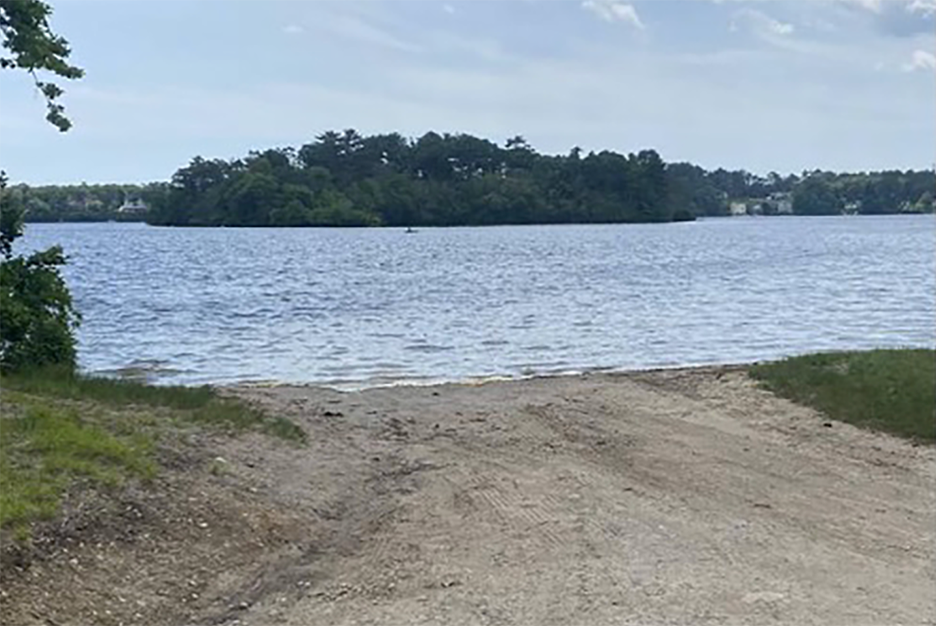
Billington was survived by his wife Elinor, and one son, Francis, who was still living in the Colony in 1634, as was Elinor, who had remarried, and lived until 1638. Francis achieved a level of fame by having discovered a body of water near the Plymouth settlement which became known as the “Billington Sea”—a beautiful and tranquil warm water pond that today is a popular boating spot. It is this pond that provided the original Plymouth settlers with their fresh water, via the “Town Creek” that ran down the slope of this hill on which the settlement was built. For this discovery, we can remember the Billington for at least one positive contribution to the life of the Plymouth Colony.