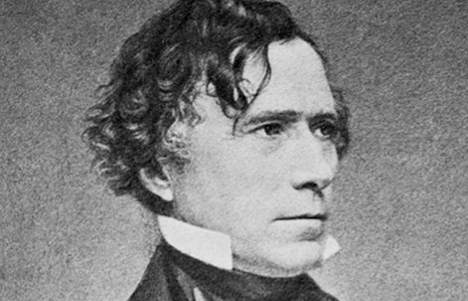
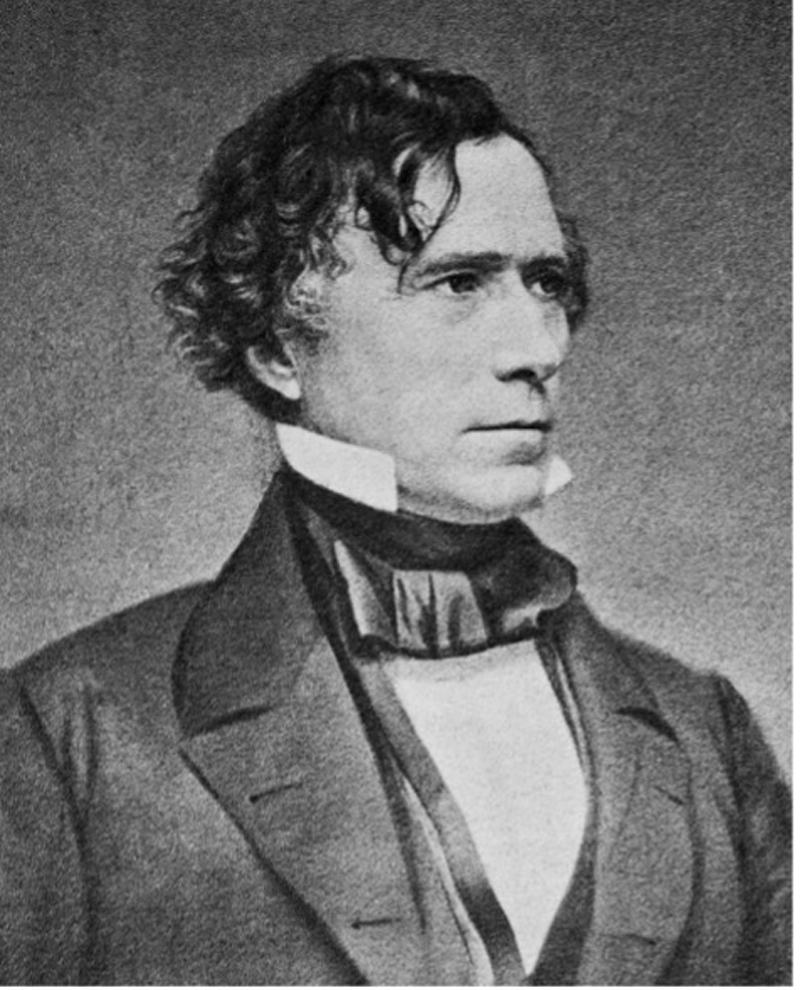
Franklin Pierce, the 14th President of the United States, served from 1853 to 1857 during a period of growing sectional tension between the North and South. A native of New Hampshire and a Democrat, Pierce believed that the abolitionist movement was a threat to national unity and alienated anti-slavery groups by signing the Kansas-Nebraska Act. This act effectively repealed the Missouri Compromise and allowed territories to decide the issue of slavery through popular sovereignty. This act intensified national divisions and contributed to the outbreak of violence in “Bleeding Kansas”.
He fully expected the Democrats to renominate him in the 1856 presidential election, but they abandoned him and his bid failed. His reputation in the North suffered further during the American Civil War as he became a vocal critic of President Lincoln.
Despite his intentions to maintain unity, Pierce’s administration is often criticized for exacerbating sectional conflict and failing to provide strong leadership during a critical time in American history. His alignment with pro-slavery policies alienated many in the North and weakened the Democratic Party, paving the way for the rise of the Republican Party. After leaving office, Pierce lived in relative obscurity and struggled with personal tragedies, including the loss of his children and his wife’s declining health. He died in 1869 in Concord, New Hampshire, leaving behind a legacy overshadowed by the deepening crisis that would soon erupt into the Civil War.