For American settlers living west of the Appalachian Mountains in the 1790s, the Mississippi River was more than a geographical landmark. It was a commercial lifeline. Farmers in Kentucky, Tennessee, and the Ohio Valley needed a way to transport their crops to distant markets, but the river’s southern reaches and the port of New Orleans were controlled by Spain.
That control gave Spain a lot of leverage over the young United States. It also created an urgent diplomatic challenge for President George Washington’s administration. The solution came in 1795 with Pinckney’s Treaty, an agreement that helped shape the future of American expansion.
Spain's Changing Position
By the mid-1790s, Spain faced growing difficulties maintaining its influence in North America. The French Revolutionary Wars strained its resources, while American settlement along the Mississippi River increased pressure on its colonial territories.
Spain also worried about the possibility of closer relations between the United States and Britain following Jay’s Treaty, negotiated in 1794. An American British alignment could threaten Spanish interests in Louisiana and Florida.
Seeking greater stability, Spain became more willing to negotiate over disputed boundaries and commercial access.
A River Worth Fighting For
For Americans living in the western territories, access to the Mississippi was an economic necessity. Shipping goods downriver offered a practical route to markets beyond the Appalachian Mountains, but Spanish restrictions created uncertainty for farmers and merchants.
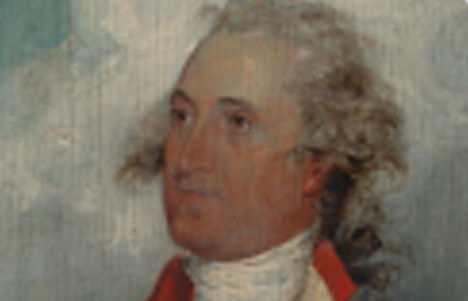
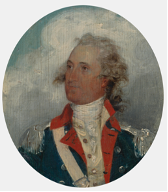
The Washington administration sent Thomas Pinckney, the American minister to Spain, to negotiate a settlement. After difficult discussions with Spanish official Manuel de Godoy, the two countries signed the Treaty of San Lorenzo, better known as Pinckney’s Treaty, on October 27, 1795.
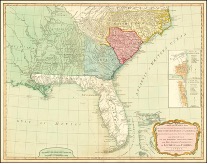
The agreement addressed three major concerns. Spain recognized the 31st parallel as the boundary between the United States and Spanish Florida, agreed to withdraw its military forces from territory north of that boundary, and granted American citizens navigation rights on the Mississippi River.
It also allowed Americans to store goods at New Orleans and export them without paying Spanish customs duties, apart from storage costs. This privilege was initially guaranteed for three years, with provisions for its continuation or an equivalent facility elsewhere along the river.
A Diplomatic Victory With Unequal Consequences
For the United States, Pinckney’s Treaty was an important diplomatic achievement. It improved opportunities for western commerce, strengthened the federal government’s standing among frontier settlers, and reduced a major source of conflict with Spain. The agreement also marked a retreat from Spain’s earlier efforts to maintain a buffer against American expansion.
For Native nations, however, the consequences were far less favorable. Spain had maintained relationships with Indigenous communities seeking to resist American encroachment. The treaty restricted future alliances across the newly recognized boundary and weakened an important source of diplomatic and military support for those communities.
Nor did the treaty resolve every dispute immediately. Spanish withdrawal from contested territory took years, illustrating the difference between reaching a diplomatic agreement and putting its terms into practice.
The Road to the Louisiana Purchase
Pinckney’s Treaty helped establish the Mississippi River as a vital commercial artery for the expanding United States. It made western settlement more economically attractive and strengthened American expectations of access to the river and New Orleans. Those expectations would become especially important in the years leading to the Louisiana Purchase of 1803, when control of New Orleans again became a major diplomatic concern.
Signed more than two centuries ago, Pinckney’s Treaty remains a significant achievement of early American diplomacy. It helped secure commercial opportunities for the young republic while accelerating the territorial changes that would profoundly affect Spain, Native nations, and the future of the American West.
Images
- Cover: John Trumbull, Thomas Pinckney, 1791. National Portrait Gallery, Smithsonian Institution
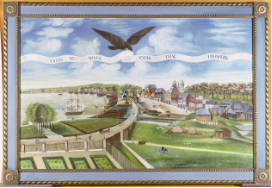
- J. L. Bouquet de Woiseri, View of New Orleans from the Plantation of Marigny, 1803.
- Robert Laurie and James Whittle, A New and General Map of the Southern Dominions Belonging to the United States of America, 1794. Allen Lastinger Center for Florida History, Thomas G. Carpenter Library, University of North Florida.
Further Reading
- U.S. Department of State, Office of the Historian — Treaty of San Lorenzo/Pinckney’s Treaty, 1795
- George Washington’s Mount Vernon — Pinckney’s Treaty, including the treaty’s text
- Mississippi Encyclopedia — Treaty of San Lorenzo, Pinckney’s Treaty
- Yale Law School, Avalon Project — Treaty of Friendship, Limits, and Navigation Between Spain and the United States; October 27, 1795