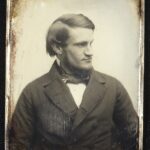
One of the most prominent merchant-adventurers of the Jamestowne Colony era was Sir John Wolstenholme. Born in 1562, he was a leading member of the Virginia Company, the organization that oversaw the development of the first permanent English settlement in North America. When King James I issued his Charter to the Virginia Company in 1609, Wolstenholme served as a member of the Council of the Virginia Company. In addition to his involvement with Jamestowne, he also financed various expeditions to North America, including Henry Hudson’s famous expedition to discover the mythical Northwest Passage (instead, he discovered Manhattan!). Wolstenholme was knighted by King James I in 1617, a testament to his importance to the Crown’s overseas adventures. Wolstenholme unsuccessfully ran against Sir Edwin Sandys for the position of Treasurer of the Virginia Company, losing by 59 to 23 votes.
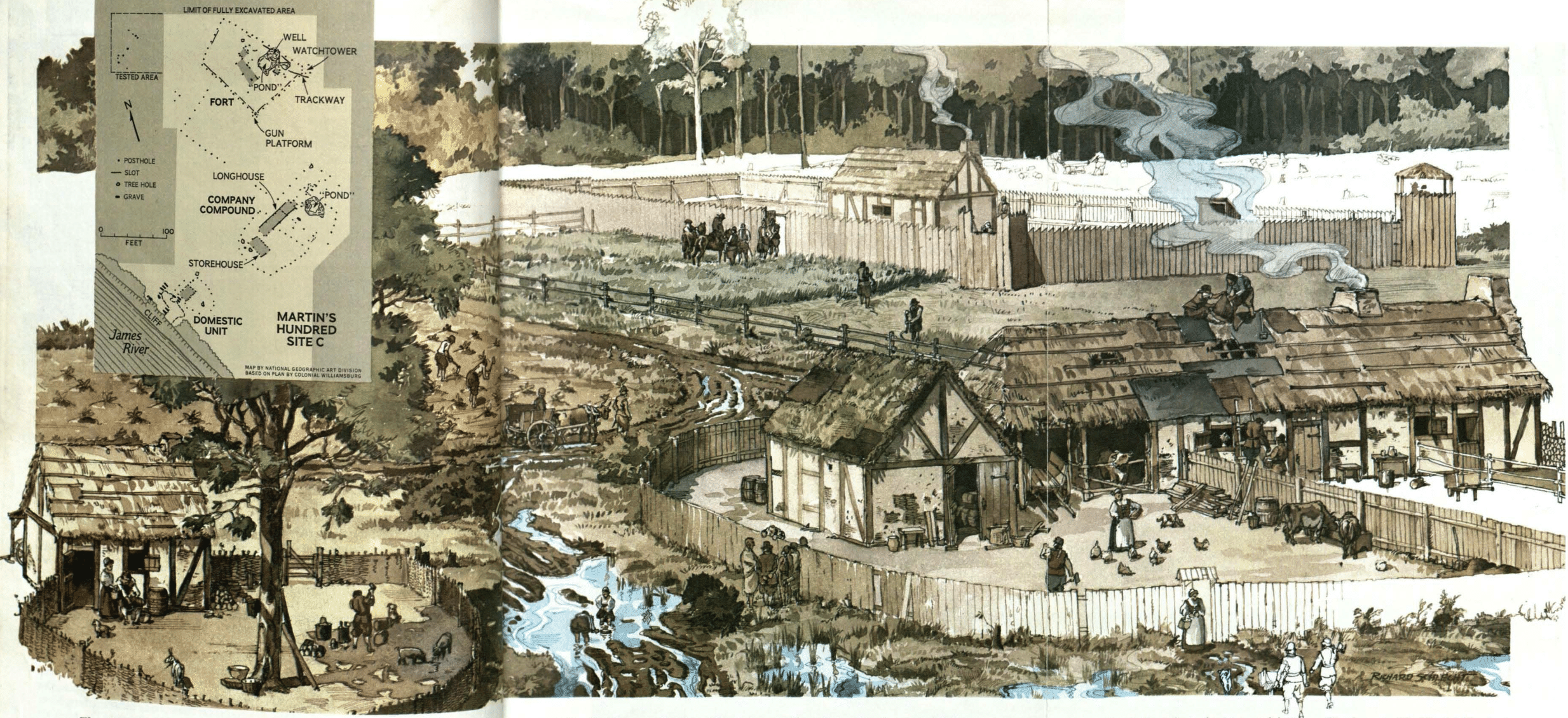
In 1618, Wolstenholme became the chief investor in the new 20,000-acre settlement known as Martin’s Hundred, and gave his name to the principal town within the Hundred, Wolstenholme Towne. As James Horn describes in his book A Land as God Made It, “many settlers lived in small clusters of houses within a palisaded settlement or near to a fortification, such as … Wolstenholme.” In its first few years of existence, Wolstenholme Town was the center of Martin’s Hundred. The population swelled in 1621 when a number of the young “maids” imported to Virginia came to reside in Wolstenholme, where they were to marry and have families.
Presciently, the town’s leaders had caused Wolstenholme Town to be heavily fortified. However, that effort did not save Martin’s Hundred from being devastated in the “Massacre of 1622” the following year. The settlement was burned to the ground, with only two houses and part of a church remaining. Of all the settlements surrounding Jamestowne Fort in 1622, the largest number of fatalities took place at Martin’s Hundred. It is estimated that 50-70 of Wolstenholme’s settlers perished, including women and children. Many survivors fled to the safety of the Fort. The town was abandoned, and later was sold to Robert Carter, who established a new settlement called Carter’s Grove Plantation. In 1970, the land was acquired by the Colonial Williamsburg Foundation, and is now privately owned.
Notwithstanding the destruction of the settlement that carried his name, Wolstenholme continued to be heavily involved in the affairs of the Jamestowne Colony. In 1624, he was appointed to serve on a commission investigating the Virginia Company in the wake of the Massacre of 1622, which led to the Company’s Charter being revoked that same year.
Following the King’s takeover of the Jamestowne Colony, Wolstenholme became a member of King Charles I’s Council for Virginia, and in 1631 he was named Commissioner for the Plantation of Virginia. A few years into his tenure, then-Governor John Harvey claimed that there was a conspiracy afoot, led by Wolstenholme, to modify the Royal Charter, and that this was somehow the true cause of the failure of Harvey’s administration, not his own mismanagement. Harvey was impeached and returned to England. He lived to see his reputation restored, however, and he returned in 1637 to serve as Governor from 1637 to 1639.
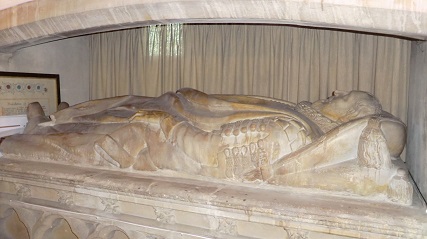
Wolstenholme died on November 25, 1639, at the age of 77, and is buried in the Great Stanmore Church in Middlesex, now part of Greater London. His tomb features a beautiful marble sarcophagus, a fitting tribute to a man who contributed so much to the history of 17th-century Virginia. He was survived by his wife, Catherine Fanshaw, and four children.
Images
Cover: Sir John Wolstenholme funerary monument, St. John the Evangelist Church, Great Stanmore, England. Photo: Stanmore Tourist Board
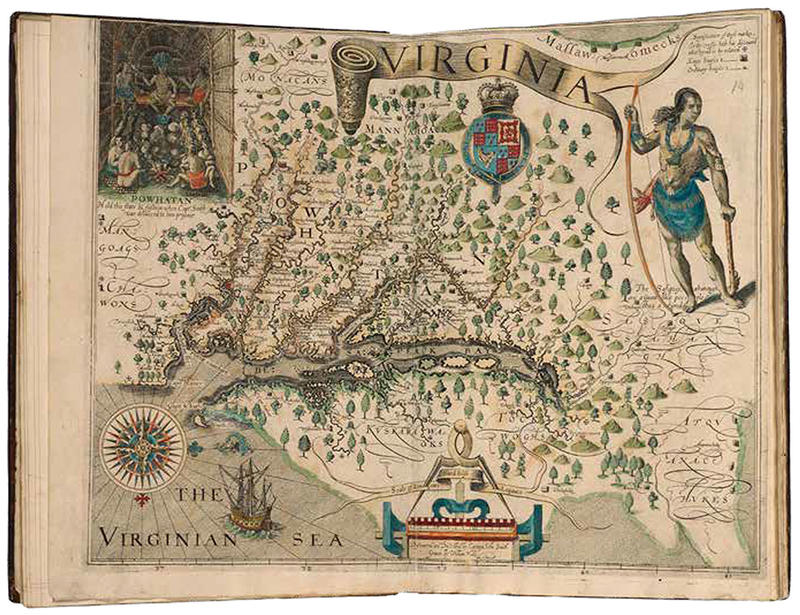
John Smith, Map of Virginia, 1612, gouache & ink on paper, Bodleian Libraries, University of Oxford
Richard Schlecht, Reconstruction of Wolstenholme Towne at Martin’s Hundred, Virginia. Illustration published in National Geographic, June 1979, accompanying an article by Ivor Noël Hume
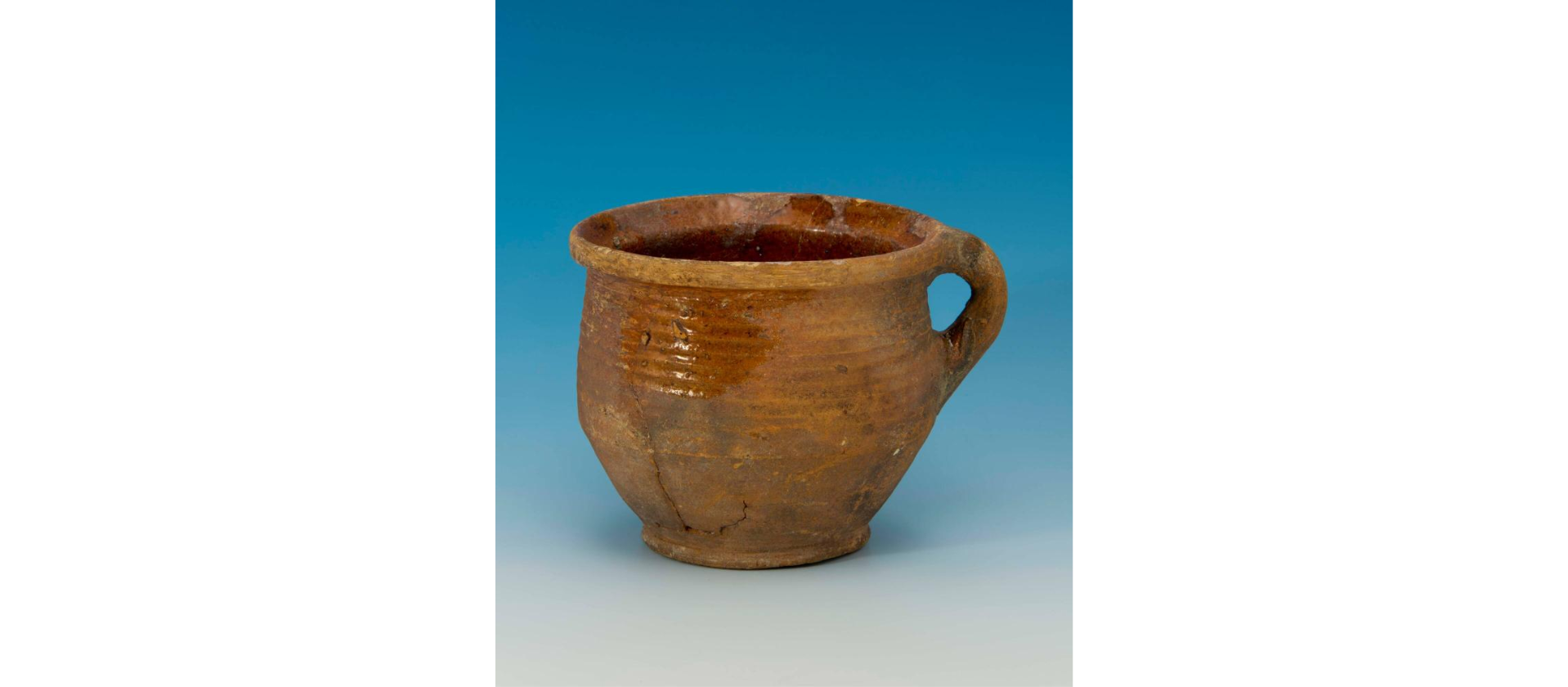
Cooking pot, 1620–1640. Archaeological Collection, Colonial Williamsburg Foundation, OBJ-50AA-01024