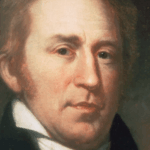
One of the watershed events in American history was the famed Lewis & Clark Expedition, a 2+ year exploration of the western territories acquired by the United States from France under the terms of the Louisiana Purchase. The expedition was Thomas Jefferson’s brainchild, and it was he who hired Meriwether Lewis and William Clark to organize and lead the expedition.
The Journey
The Lewis & Clark expeditionary force, otherwise known as the Corps of Discovery, left St. Louis on May 14, 1804, and undertook what turned out to be a grueling 8,000-mile journey lasting 2 years, 4 months, and 22 days. The Corps’ main objectives were scientific and commercial – to study the area’ plants, animal life, and geography, and to learn how the Louisiana Purchase could be exploited economically. Aside from its military composition, the Corps’ additional personnel included scouts, boatmen, and civilians.
Another major goal of the Expedition was to bring back detailed maps of the lands the Expedition would traverse, which ultimately proved to be invaluable to the U.S. government in its efforts to settle the West, exploit its natural resources, and extend its borders. Much of the credit for the mapping activities undertaken during the journey went to William Clark. He charted the Expedition’s progress, but he also kept the men moving, checking their supplies, and making sure the canoes stayed afloat when they were navigating the various rivers and streams along their routes. Clark was the backbone of the expedition.
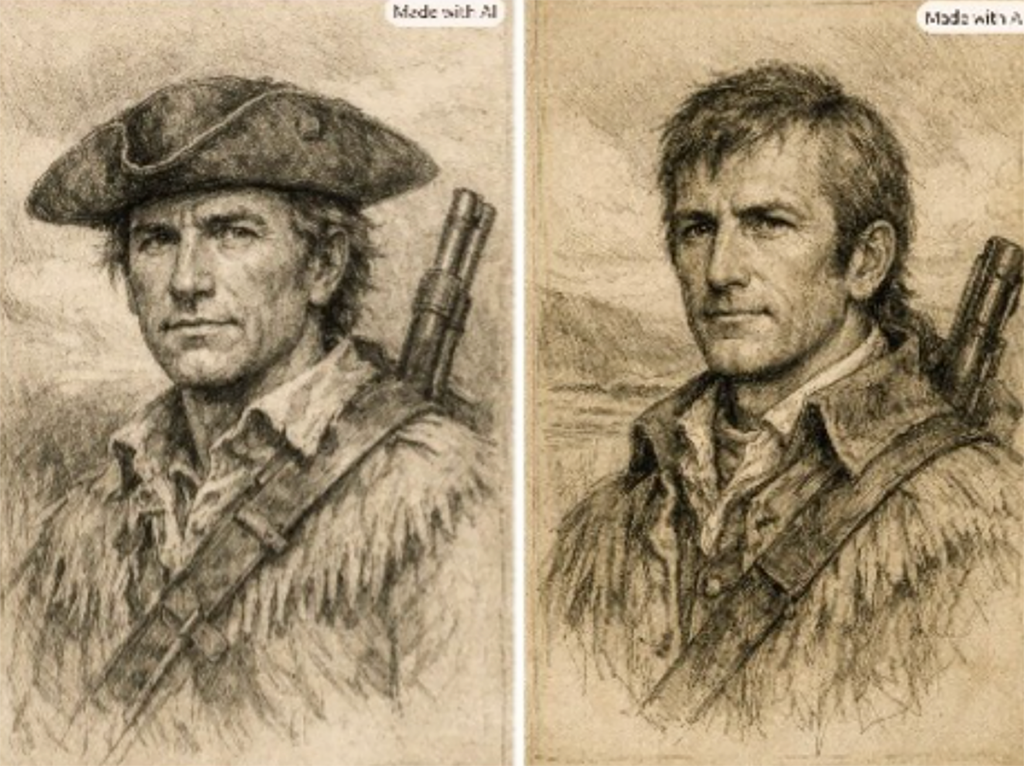
The fruits of the expedition were remarkable. During the journey, Lewis & Clark regularly sent letters back to President Jefferson reporting on their progress, sometimes including various artifacts to share with a curious President. Their journals, not published until 1814, included detailed information on everything they encountered, including their interactions with various Native-American tribes.
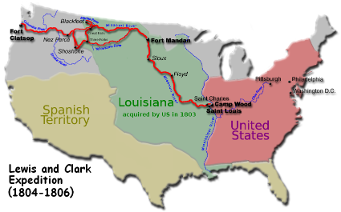
At long last, the expedition reached the Columbia River, and followed it west to the Pacific Ocean. It was November 1805, a year and a half since the Expedition had left St. Louis. There they spent the winter months resting and recuperating from their challenging journey across the Rocky Mountains. They remained encamped on the south side of the Columbia River (near present-day Astoria, Oregon) until the end of March 1806, then began the journey back to civilization. It would be another six months before they reached home.
The Return Trip
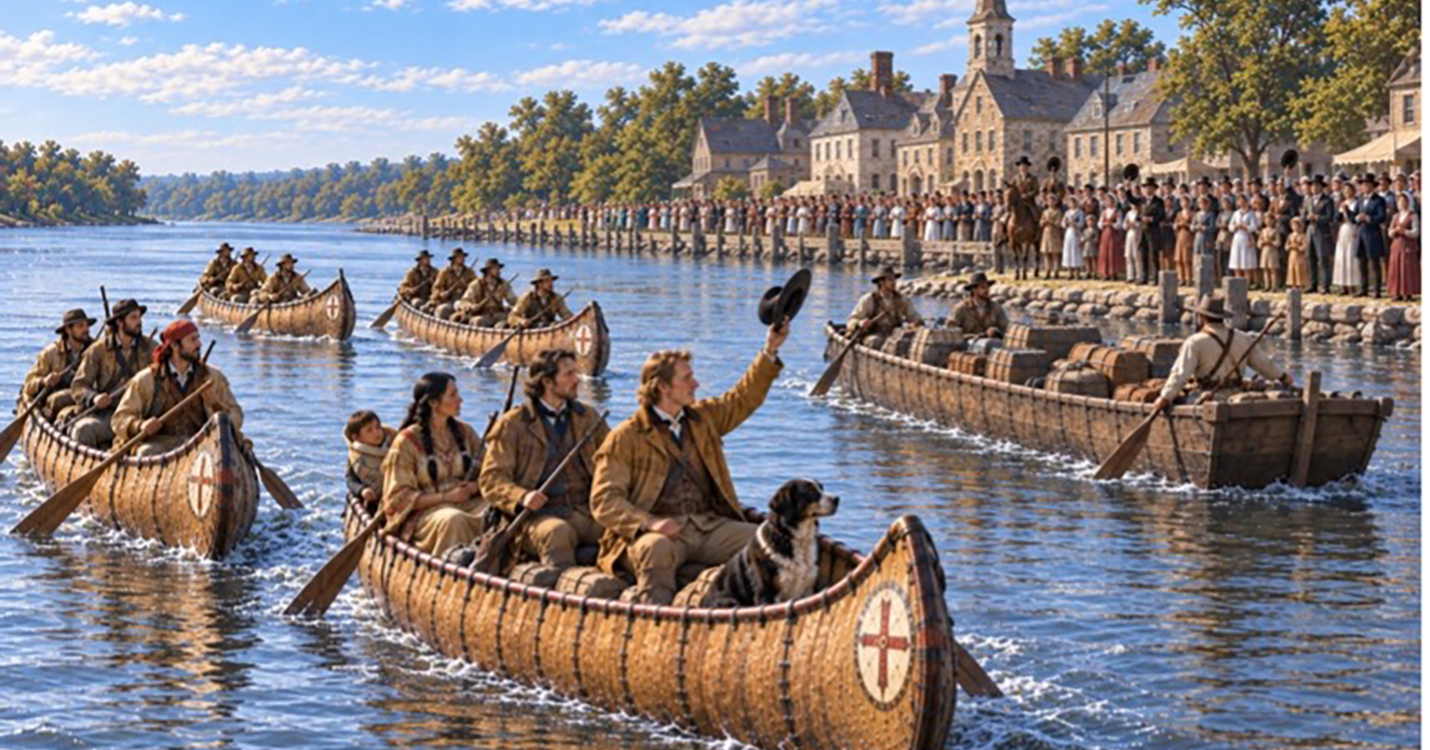
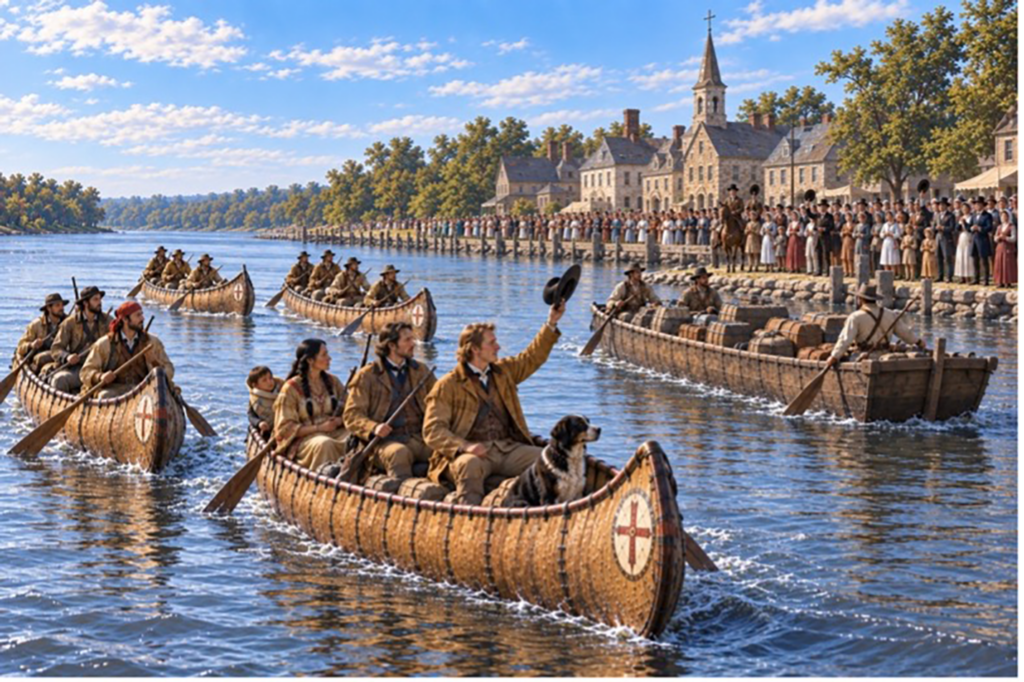
And so the expedition headed home. Lewis & Clark and their men reached the Continental Divide in July, and arrived at the confluence of the Yellowstone and Missouri rivers in mid-August. There they boarded their boats for the final leg of the journey. For any settlers who might have been living or traveling along the river in August and September, it must have been a miraculous sight: six boats filled with men whose clothes were patched with elk hide, their faces carved thin by wind and hunger, and their firearms worn smooth from constant use. These men bore the unmistakable signs that they had explored a continent and lived to tell of it. The closer the expedition came to settlements, the more the world changed. The riverbanks bore signs of human hands. Smoke rose from distant cabins. Traders appeared, astonished to see the Corps alive. Word traveled ahead of them like a spark on dry grass.
In later years, old-timers liked to say that Lewis and Clark were the first to bring the Pacific wind back to the settlements. Meriwether Lewis felt the effects of their incredible journey most keenly. On the outbound journey, the Missouri had been a question mark: where did it go, and would it lead to a Northwest Passage to the Pacific? Now they had their answer. Lewis often rode ahead, scanning the plains with that restless curiosity that had driven him all the way to the Pacific Ocean. But beneath it was a deeper pull — the desire to bring the story home, to place it in the hands of President Jefferson, and prove that the gamble had been worth the lives and miles spent.
As the expedition neared the end of its journey, Lewis felt the weight of responsibility even more. They had crossed mountains that broke horses, rivers that swallowed canoes, plains that stretched farther than imagination. Their stalwart Indian guide, Sacagawea, traveled with them still. She had guided them through the mountains of her Shoshone homeland, interpreted when needed, and kept peace when tempers ran hot. Now she seemed content to let the river carry them toward whatever future awaited. William Clark often looked at her son — “Pomp,” he called him — and wondered what kind of man the boy would grow into. Ultimately, he was to adopt the boy and raise him as his own.
The Homecoming
When the Corps of Discovery reached St. Louis on September 23, 1806, the city erupted. Bells rang. People poured into the streets. The Corps of Discovery — once a quiet band slipping out of town — returned as American heroes.
But the West was already changing. The maps Lewis and Clark carried would soon guide trappers, traders, surveyors, and eventually families with wagons full of hope and iron tools. Their journals would become the bones of future routes — the Oregon Trail, the pathways to the Rockies, the roads that would one day lead settlers into the Great Basin and the silver-rich mountains of Nevada.
The return of Lewis and Clark wasn’t just the end of an expedition. It was the beginning of a movement — a slow, steady tide of Americans drifting westward, carrying with them dreams, troubles, and the stubborn belief that the horizon always held something worth seeking. Soon, Americans came to believe that it was their Manifest Destiny to conquer the west, and claim the North American continent—or as much of it as they could—as their own.