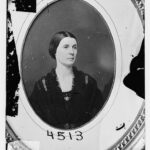
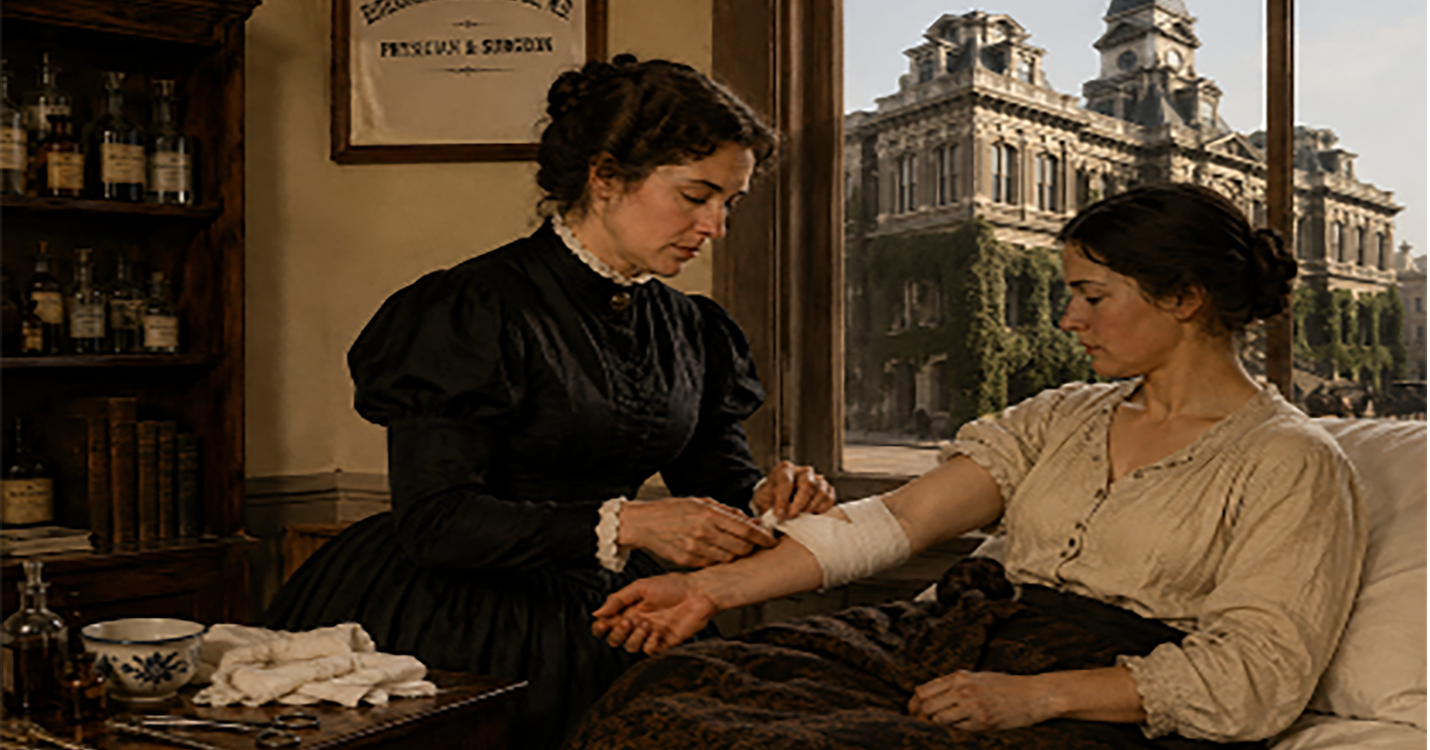
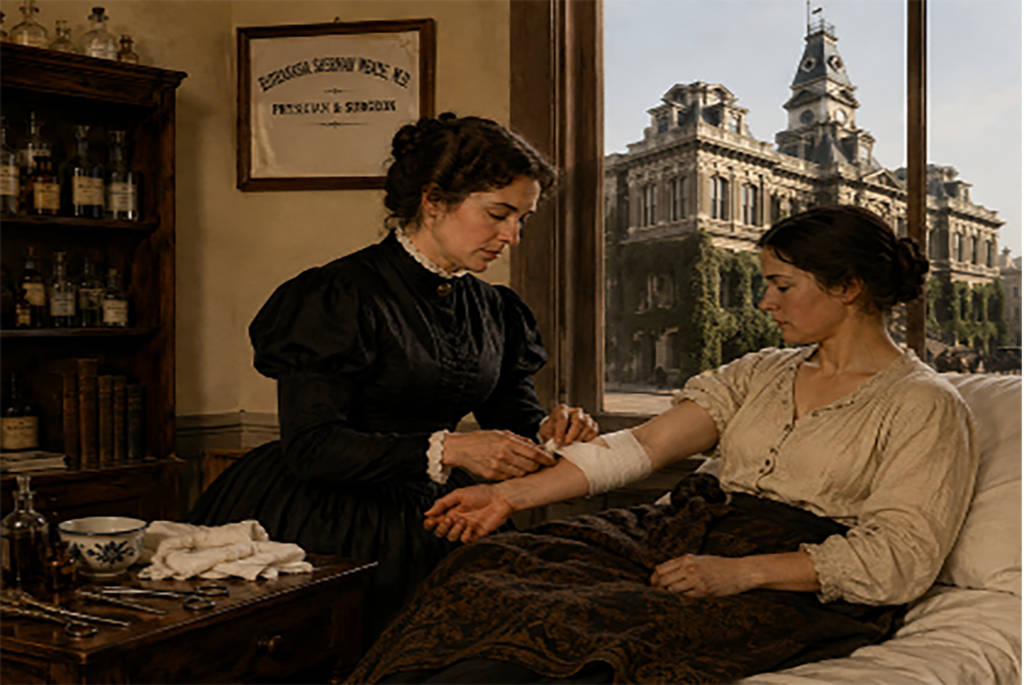
When we think of courageous women of the 19th century, among the top ten would be Clara Barton, the Civil War-era nurse who served on the battlefields of the “war between the States,” and who later founded the American Red Cross. But she was not the only courageous female medical professional practicing during the period of the Civil War. Today, we remember Euthanasia Sherman Meade, who—unlike Clara Barton—was actually a trained physician who received a medical degree and practiced medicine in California for decades before her early death at age 58 in 1895.
Born in New York on this day on September 8, 1837, Euthanasia had an arranged marriage while still a teenager, and she and her husband moved to California in 1854, at the tail end of the famous California Gold Rush. Her first few years of medical practice there focused on obstetrics, after she herself had lost a child during childbirth. Wanting to further her career in medicine, she went back to the east coast to earn her medical degree at the Woman’s Medical College of Pennsylvania. Returning to California, she is said to have become the first credentialed female doctor in the state’s history.
Euthanasia practiced for several decades in San Francisco and San Jose, and became the first president of the Women’s Medical Club of California. Despite her years of successfully treating patients, however, her accomplishments were largely ignored by her male counterparts in the medical profession. Yet, other women who knew her took note, including one of her aides, who described Euthanasia as an “indominable, high-minded woman,” and was eulogized as an outstanding physician. Among her patients was one of California’s most famous women, Sarah Winchester, widow of the man who invented the Winchester rifle, and whose home in San Jose has become a historic treasure: the “Winchester Mystery House.”
Upon her death on November 1, 1895, Euthanasia was honored by the Women’s Medical Club in words that reflect her major contributions to medicine in the State of California. The Club’s resolution in her honor stated that Euthanasia had been “undaunted by all the prejudice and obstacles in the way of the honorable pursuit of her chosen profession in pioneer days.”
Two continuing mysteries survive today. First, who was her husband? Presumably he was Mr. Meade, but there are no records confirming who he was, and there is no record of Euthanasia bearing any more children after the death of her first child. Second, where did she acquire the name “Euthanasia”? Online sources say that her name had nothing to do with the well-known medical procedure of that name. Rather, historians speculate that she was named after a character in a popular novel published before her birth, Mary Shelley’s “Valperga,” in which one of the main characters was so named. That would be an odd choice, since in Latin the word translates to a “good or noble death”—hardly what you would want to name your daughter. So, the mystery continues.
Euthanasia’s estate, which was substantial, was the subject of a controversial legal proceeding following her death. She had no direct heirs, but she left an allegedly holographic will in which she gave her brother, Porter Sherman, all powers of administration. But her mother suddenly appeared on the scene, and successfully challenged the grant of administrative powers awarded to her own son. The newspaper report of this family squabble, published in September 1896, gave no indication of what Euthanasia’s mother then did with Euthanasia’s estate.
Although Euthanasia died in San Jose, California, there are varying accounts of where she is buried. Wikipedia says she was cremated and her ashes placed at Cypress Lawn Cemetery in Colma, California. Find-A-Grave shows her as having been buried at Lake View Cemetery in Hillsdale, Michigan. Cypress Lawn Cemetery itself has no record of her having been buried there.
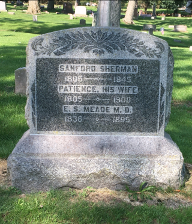
But here is a tantalizing clue: Euthanasia’s mother, “Mrs. Patience Sherman,” was identified in one newspaper account as being from “North Michigan.” It turns out that Euthanasia’s mother died in 1900 at the age of 95, and was buried in Hillsdale, Michigan alongside her husband Sanford Sherman, Euthanasia’s father. Mystery solved: Patience’s tombstone shows Euthanasia also is buried there (or her cremated remains interred there). She is identified as “E.S. Meade M.D.” Thus did Euthanasia’s mother, who died five years after her daughter, pay tribute to her, one of the greatest 19th century female physicians in the American West.