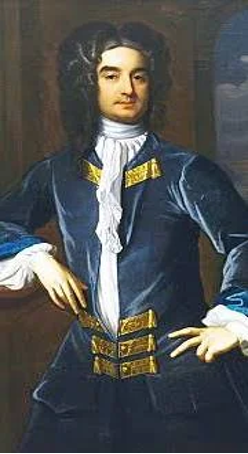
In the early years of the Jamestowne Colony, one of the families that became a dynasty of sorts over the course of the next century was the Byrd family. It began with the arrival of William Byrd I in 1669. He became a prominent member of the House of Burgesses, while also achieving great wealth from his Native-American fur trading and other business endeavors. He also was involved in a host of controversial events in the life of the Colony, including the famous Bacon’s Rebellion in 1676, in which at first he was an ally of Nathaniel Bacon (a business partner), but then abandoned the cause and became a supporter of the royal Governor William Berkeley. Over time he amassed huge landholdings, including land on which sits the modern city of Richmond, Virginia.
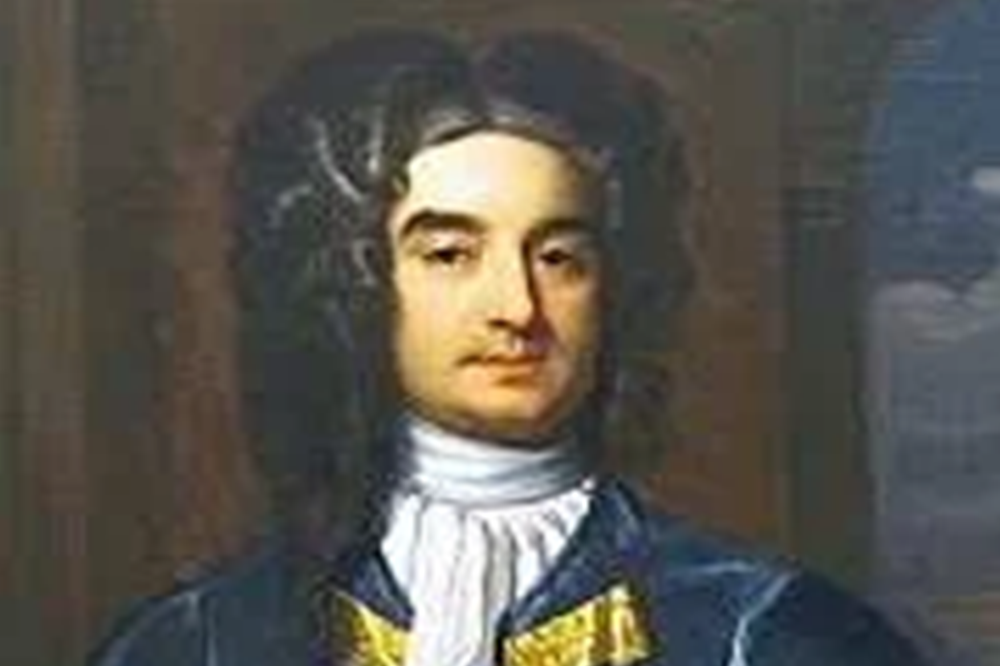
William Byrd I. died in 1704, but he left a lasting legacy in the form of his son, William Byrd, II, who we honor today on the anniversary of his birth on March 28, 1674. William II was a prolific writer and adventurer, whose achievements included the marking of the boundary line between Virginia and North Carolina in 1728. Educated in England, he was fluent in several languages, studied law, and was a member of the Royal Society, a sign that although he had been born in Virginia, he had become a gentleman who traveled in London’s most elite social circles.
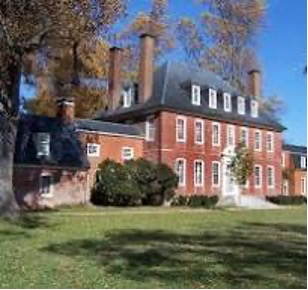
In his early years, William II was closely associated with various members of the ruling class in England. When he returned to Virginia in 1696, he was almost immediately elected to the House of Burgesses, but found Virginia not to his taste. He returned to England, and did not return until his father died in 1705. Upon arrival he was suddenly one of the richest men in the Colony, and he was elevated to the Virginia Governor’s Council in 1709. In that role, he became a political adversary of Lt. Governor Alexander Spotswood, who caused William to be removed from the Governor’s Council. William proceeded to travel back and forth between the Virginia Colony (whose seat of government was now in Williamsburg) and London. He ultimately returned to Virginia in 1726; this time he stayed, and built one of the great plantations of the Virginia Colony: Westover, which still stands today, one of only five remaining plantations from that era.
It was in 1728 that William II undertook one of the more amazing expeditions in early colonial times, which he later wrote about—a harrowing and sometimes deadly trek through the swamps and raw wilderness of North Carolina. He and a group of intrepid explorers had volunteered to survey and map a boundary between Virginia and the new Colony of North Carolina, and Byrd lived to tell about it. We commend to you his manuscript entitled The History of the Dividing Line Betwixt Virginia and North Carolina; A Journey to the Land of Eden.
As for William’s personal life, he married Lucy Parke, daughter of the Governor of the Leeward Islands at the time, Daniel Parke, who owned a plantation outside of Williamsburg. William and Lucy were married at the plantation in 1706, just a year after William’s return from England following his father’s death. They had a difficult marriage, and Lucy was a temperamental person, who sometimes abused their slaves and otherwise misbehaved. Lucy died of smallpox in 1716 while the family was in London. A decade later, William married Maria Taylor. She was 25 years younger than William, but came from a very wealthy family. The age difference did not impede the marriage by any stretch—William was constantly in debt, and her fortune was an attractive side benefit of the marriage. Together they had four children, and Maria lived a long life. She outlived William by several decades, and continued to live in their plantation home at Westover on the James River.
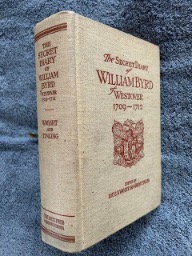
William was above all a renaissance man. He wrote extensive diaries of life in the Virginia Colony, in which he profiled many of the leading citizens of his era, who often visited Westover and spent time with William and his family. Over the years William built an enormous library of books of all kinds, which is believed to have been the largest library in Colonial America at the time. He died at Westover in 1744, and is buried there. His diaries were not published until the early 1800’s. Since then, historians have come to view William’s writings as essential reading for anyone wanting to know what life was like in Virginia in that late 17th and early 18th centuries. Interested readers should find a copy of The Secret Diary of William Byrd of Westover, published in 1941.
So today, we commemorate the birth of William Byrd II in 1674— a man who left his mark on the Virginia Colony in so many ways, and who was not satisfied to simply live the life of a Virginia planter. For that we thank him!