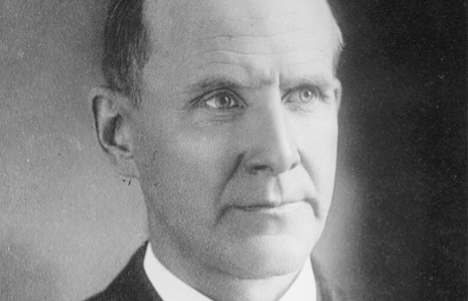
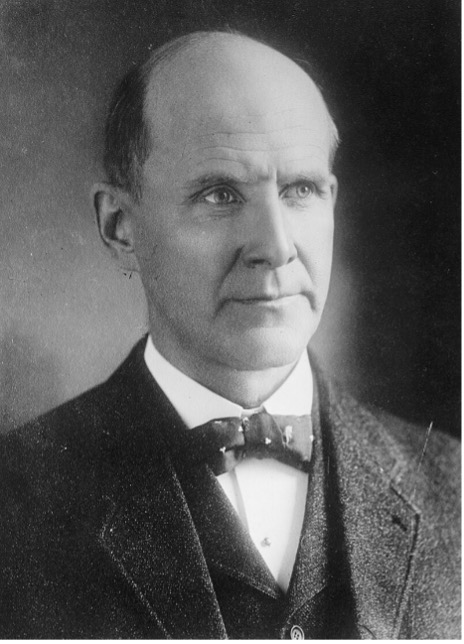
Eugene V. Debs (1855–1926) was a pioneering American labor leader, socialist, and political activist who played a central role in shaping the labor movement and socialist politics in the United States. Born in Terre Haute, Indiana, Debs began his career working for the railroads and quickly became involved in union organizing. He co-founded the American Railway Union (ARU) and led the Pullman Strike of 1894, which resulted in his imprisonment and deepened his commitment to socialism. Debs later helped establish the Socialist Party of America and ran for U.S. president five times between 1900 and 1920, famously earning nearly a million votes in 1920 while campaigning from prison for his opposition to World War I.
Debs’ speech denouncing American participation in World War I led to his second arrest in 1918. He was convicted under the Sedition Act of 1918 and sentenced to a 10-year term. President Warren G. Harding commuted his sentence in December 1921.
Debs was a charismatic orator and tireless advocate for workers’ rights, economic justice, and democratic socialism. He believed in the power of collective action and the moral imperative of equality, often challenging the political and economic establishment. His speeches and writings inspired generations of activists and laid the groundwork for future progressive movements.
Though he never held high office, Debs’s legacy endures as a symbol of principled resistance and unwavering dedication to social change. Debs died on this day in 1926, not long after being admitted to a sanatorium due to cardiovascular problems that had developed during his time in prison.