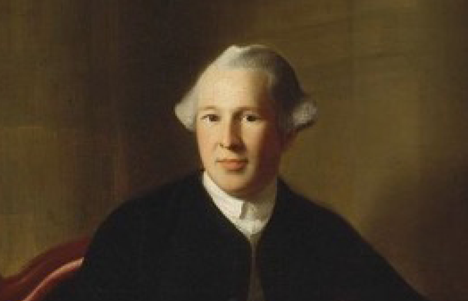
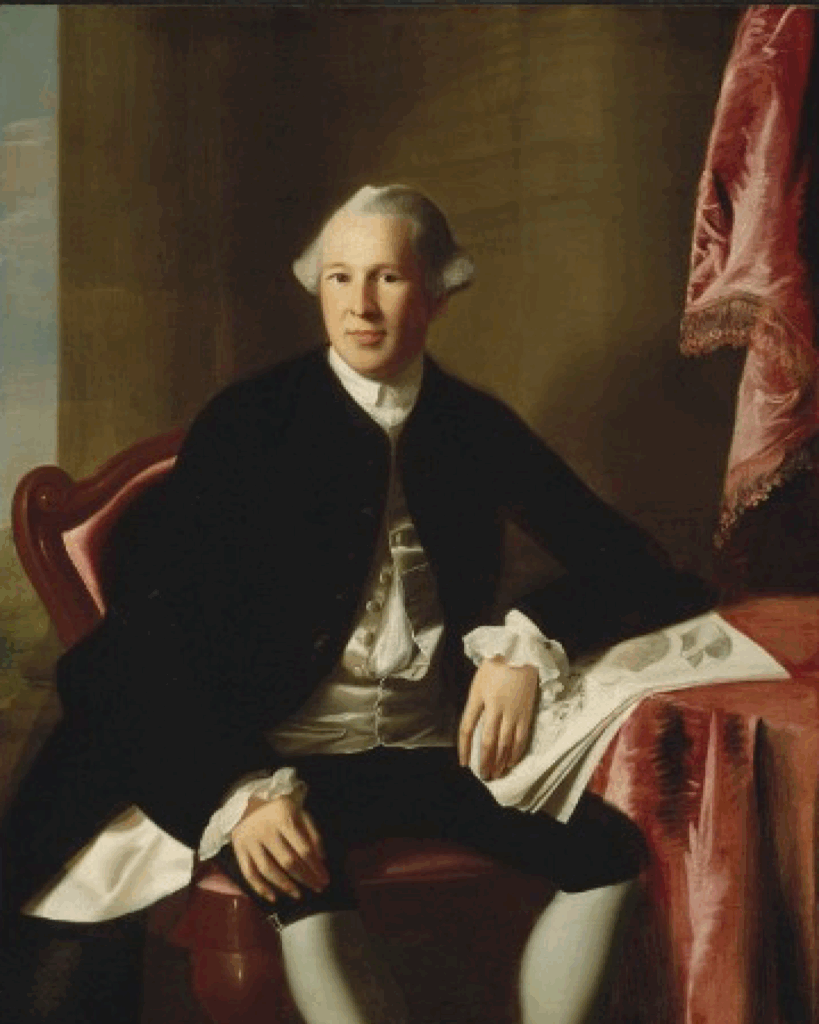
One of our most important Founding Fathers, but largely forgotten, is Dr. Joseph Warren, who was one of the leaders of the rebel forces in Boston in the years leading up to our American Revolution. We honor him today on the 250th anniversary of his death on June 17, 1775. It was on this day that he was killed by British troops at the Battle of Bunker Hill.
Joseph Warren was born in Roxbury, Massachusetts in June 1741, the son of a farmer. Unlike many farmers’ sons, however, Joseph was well educated, having attended Harvard College and receiving a Master of Arts degree in 1763. He soon took up the practice of medicine, and became a successful physician in Boston. During the 1760’s he former close relationships with several men who would become some of our most well-known Founding Fathers: Samuel Adams, John Adams, John Hancock, and Paul Revere among them. Had he lived, there is every reason to believe that Joseph Warren would have become one of the towering figures in American history.
How did a medical doctor become a leader of the revolutionary movement in Boston? It may be partially explained by the fact that Joseph and the other “rebels” mentioned above were almost all Freemasons, and members of the “Lodge St. Andrews” in Boston. Over the years Joseph became a leading member of the Lodge, and by 1769 he had become the “Master” of the Lodge. The bonds of Freemasonry he enjoyed with the likes of Samuel Adams no doubt served as the foundation for the later creation of the Sons of Liberty, the organization whose members met at Boston’s Green Dragon Tavern to plot and plan the rebellion.
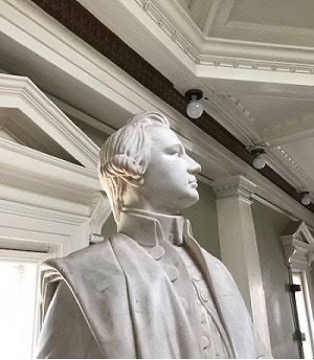
Being the highly-educated man that he was, Joseph had a gift for public speaking and writing, and he used those tools effectively to articulate the reasons why the citizens of the Massachusetts Bay Colony must rebel against their oppressors. Historians often point to the speech he delivered on the anniversary of the Boston Massacre, which he delivered in March 1775, just weeks before the Battle of Lexington and Concord and the “Shot Heard Round the World.” Joseph also was the principal drafter of the so-called “Suffolk Resolves” (September 1774), a precursor of our nation’s Declaration of Independence. His passion and commitment led to his being named the president of the Massachusetts Provincial Congress, which was the governing body that the rebels established in open defiance of the British government in Boston. It was, in effect, an act of treason, to create the Provincial Congress, as was the “Committee of Correspondence,” on which Joseph also served. He was indisputably one of the most active—it not the most active—of the revolutionaries in Boston.
Joseph’s leadership was not limited to political matters. Indeed, he was so intensely committed to The Cause that he actively sought out to serve in the military—with tragic consequences. In April 1775, he was a member of the local militia during the Battle of Lexington and Concord, where he distinguished himself during the British retreat to Boston along Battle Road. Before the battle itself, it was Joseph who sent his friend Paul Revere on his famous “Midnight Ride” to warn the people of Concord that the British army was coming. For all intents and purposes, Joseph was the “ring leader” of the Massachusetts militia’s preparations and defense against the British military’s escalation of hostilities in the Spring of 1775. Reflecting the esteem with which he was viewed, on June 14 he was appointed a Major General in the newly-created Continental Army– just 3 days before the Battle of Bunker Hill.
Joseph’s life was tragically cut short at the Battle of Bunker Hill. Ignoring the pleadings of his family and friends, Joseph decided that he needed to be on the battlefield, manning the ramparts along with his fellow soldiers when British soldiers attacked. He is quoted as saying, “by Heaven, I hope I shall die up to my knees in blood!” It was during one of the British attacks that Joseph was shot and killed. Horrifically, when British troops overran the rebels’ position on Bunker Hill, several soldiers proceeded to mutilate Joseph’s body, and then unceremoniously dumped his body into an unmarked grave. It wasn’t for many more months that his family and friends were able to find and identify his remains, partly thanks to Paul Revere, who was able to identify the false tooth in a skull that had been found as being one that he had made for Joseph.
After Joseph was killed at Bunker Hill, his family and friends rallied around his surviving children, and they did what they could to support the children’s education and upbringing. Joseph had married Elizabeth Hooten in 1764, and together they had four children. She died young in 1773, so at the time of his death Joseph was a widowed single parent (but with a fiancée who he planned to marry).
To many of his compatriots, Joseph Warren died a martyr. He need not have fought at Bunker Hill, but his commitment to the cause of freedom led him to place himself in harm’s way. His death was widely mourned at the time, but his many contributions to our nation’s founding are largely forgotten. A monument to him is on display near Bunker Hill Monument, but he deserves more! Let us at least take a moment and remember him on this day, the 250thanniversary of his untimely death on Bunker Hill.