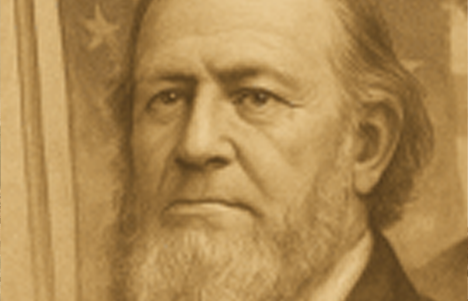
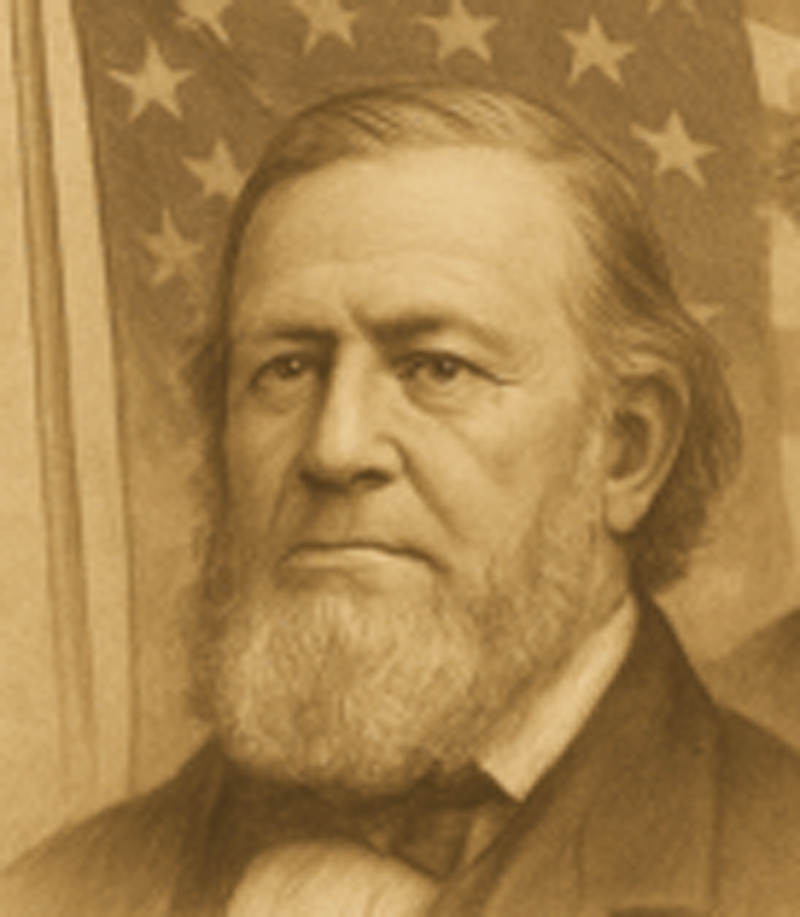
Born on this day in 1801 was Brigham Young, an American religious leader and politician. He was the second president of the Church of Jesus Christ of Latter-day Saints (LDS Church) from 1847 until his death in 1877. He also served as the first governor of the Utah Territory from 1851 until his resignation in 1858.
Young was born in 1801 in Vermont and raised in Upstate New York. After working as a painter and carpenter, he became a full-time LDS Church leader in 1835. Following a short period of service as a missionary, he moved to Missouri in 1838. Later that year, Missouri governor Lilburn Boggs signed the Mormon Extermination Order, and Young organized the migration of the Latter Day Saints from Missouri to Illinois, where he became an inaugural member of the Council of Fifty.
In 1844, while he was traveling to gain support for Joseph Smith’s presidential campaign, Smith was killed by a mob, igniting the Illinois Mormon War and triggering a succession crisis in the Latter Day Saint movement. After negotiating a ceasefire, Young was unanimously elected as the church’s second president in 1847.
During the Mormon exodus, Young led his followers west from Nauvoo, Illinois, via the Mormon Trail to the Salt Lake Valley. Once settled in Utah, he ordered the construction of numerous temples, including the Salt Lake Temple. He also formalized the prohibition of black men attaining priesthood and directed the Mormon Reformation. A supporter of education, Young worked to establish the learning institutions that would later become the University of Utah and Brigham Young University.
A polygamist, Young had 56 wives and 57 children. His teachings are contained in the 19 volumes of transcribed and edited sermons in the Journal of Discourses. His legacy and impact are seen throughout the American West, including numerous memorials, temples, and schools named in his honor. In 2016, Young was estimated to have around 30,000 descendants. He remains a controversial yet impactful character who shaped the evolution of the west in the mid-19th Century.