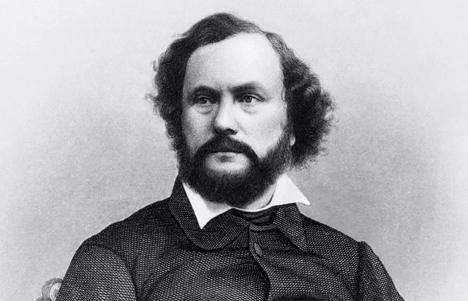
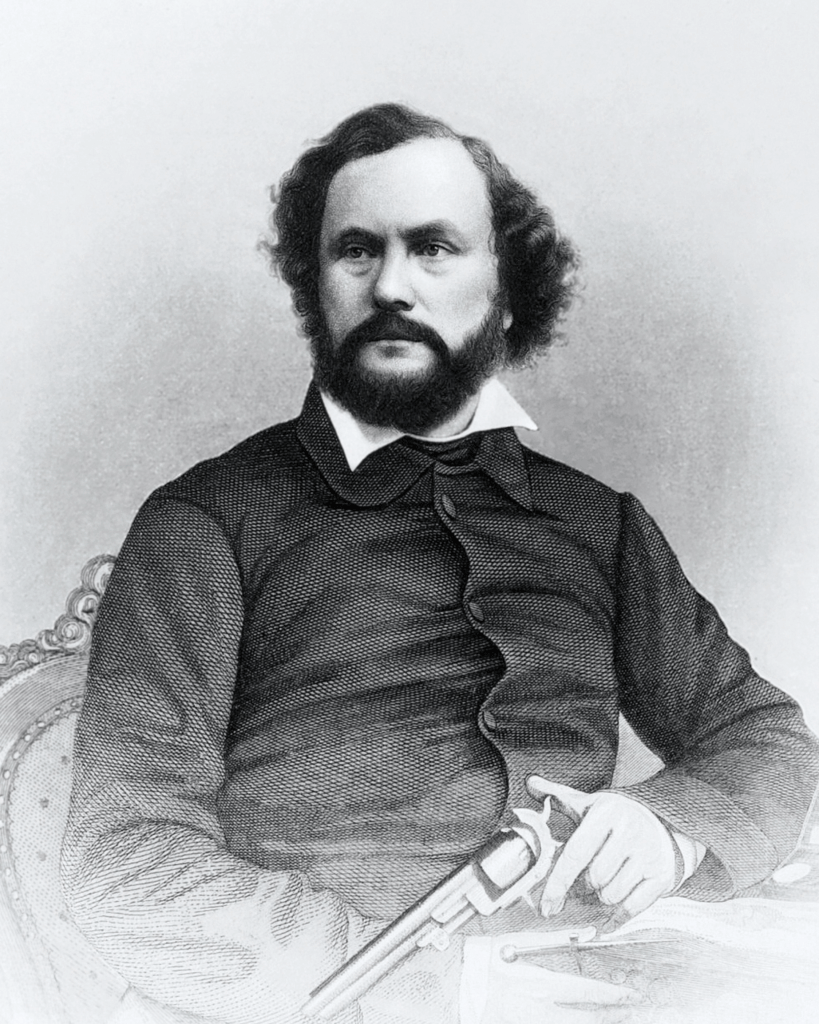
Samuel Colt, born on this day, July 19, 1814, in Hartford, Connecticut, was a visionary inventor and industrialist whose name became synonymous with the revolver—a repeating firearm that forever changed personal weaponry and warfare. Colt’s innovations in both firearm design and manufacturing techniques helped lay the foundation for modern mass production, placing him among the most influential industrial figures of 19th-century America.
Early Life and Influences
Samuel was the son of Christopher Colt, a textile manufacturer, and Sarah Caldwell Colt. His mother died when he was only six years old, and he was sent away to Glastonbury, Connecticut, to live with relatives and attend school. From a young age, Samuel displayed a deep fascination with mechanics and explosives, often experimenting with homemade devices. He was particularly inspired by stories of inventors like Robert Fulton and the possibilities of technology in transforming the world.
At the age of 16, Colt was apprenticed to a Boston-based seaman, and during a voyage to Calcutta in 1830–31, he reportedly carved a wooden model of a revolver based on the idea of a rotating cylinder—possibly inspired by the capstan mechanisms he observed aboard ship. Whether this account is fully accurate or embellished, it illustrates the genesis of Colt’s lifelong pursuit: creating a firearm capable of firing multiple rounds without reloading.
The Birth of the Revolver
Upon returning to the United States, Colt devoted himself to turning his concept into a practical firearm. By 1836, he received a U.S. patent for his design—a revolver with a rotating cylinder that could hold five or six bullets and be cocked for each shot. The same year, he established the Patent Arms Manufacturing Company in Paterson, New Jersey, and began producing the Colt Paterson revolver.
Though innovative, the Colt Paterson met with limited commercial success. Early models were delicate and expensive to produce, and the market was not yet fully ready for them. After a few years of low sales and financial difficulties, the company closed in 1842. However, Colt remained undeterred, convinced of the weapon’s potential.
Resurgence During the Mexican-American War
Colt’s fortunes changed dramatically during the Mexican-American War (1846–1848). Captain Samuel Walker, a Texas Ranger and military officer, had previously used Colt’s revolvers and approached him with ideas for improvements. Together, they designed the Colt Walker revolver, a more powerful and reliable firearm tailored for cavalry use. The U.S. government placed a large order for 1,000 of the new revolvers, giving Colt the opportunity to re-enter the firearms business.
To fulfill the order, Colt partnered with Eli Whitney Jr. (son of the inventor of the cotton gin), who had a firearms factory in Connecticut. This partnership proved crucial—not only did it produce the weapons on time, but it also introduced Colt to the benefits of interchangeable parts and assembly-line production. Colt would later refine and expand these methods, becoming one of the earliest champions of industrial standardization.
The Colt Empire and Mass Production
Flush with the profits and recognition from the Walker revolvers, Colt founded the Colt’s Patent Fire-Arms Manufacturing Company in Hartford, Connecticut in 1855. This factory—located along the Connecticut River—became a model of industrial efficiency and innovation. Colt implemented state-of-the-art machine tools, quality control systems, and a structured labor force to create firearms with unprecedented speed and uniformity.
His factory was also notable for its progressive employee policies. Colt paid relatively high wages, established a lunchroom, and even hired a band to play music during work hours to maintain morale. Though some of this was driven by a desire to suppress labor unrest and discourage unions, it also reflected Colt’s understanding of the importance of worker satisfaction in a productive enterprise.
In addition to revolvers, Colt’s factory also produced rifles, shotguns, and other arms. His company quickly became one of the most important weapons manufacturers in the world, supplying not just the U.S. military but also foreign governments and civilians.
The Role of Marketing and Publicity
Colt was not only a talented engineer and businessman but also a shrewd marketer. He pioneered many modern advertising techniques, including brand recognition, product placement, celebrity endorsements, and customer testimonials. He gave free firearms to famous generals, frontier legends like Buffalo Bill Cody, and even heads of state, knowing that the public would associate Colt’s guns with power, success, and adventure.
His exhibits at world fairs, particularly London’s Great Exhibition of 1851, were extravaganzas that showcased not just his weapons but his manufacturing process, which awed European industrialists. This helped secure lucrative contracts and enhanced the reputation of American manufacturing abroad.