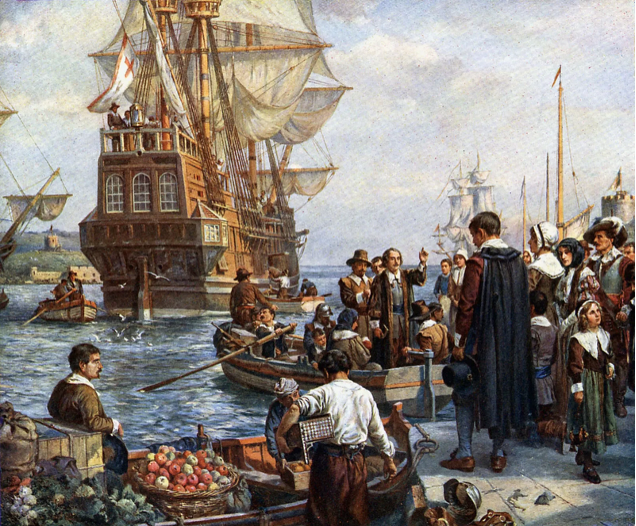
Among the most stalwart of the Separatists who lived through the entire saga of the Mayflower voyage to North America was Francis Cooke, who died this day on April 7, 1663 at the advanced age of about 80.
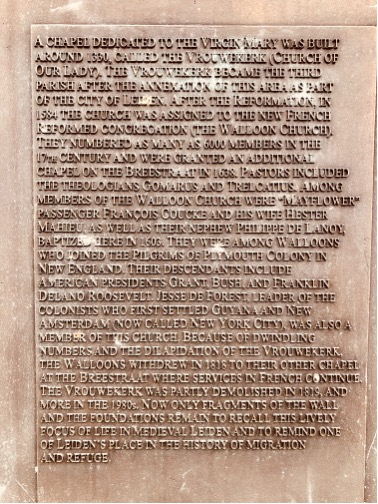
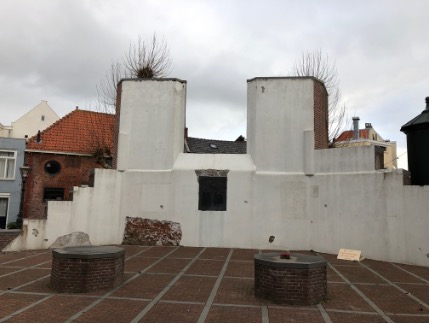
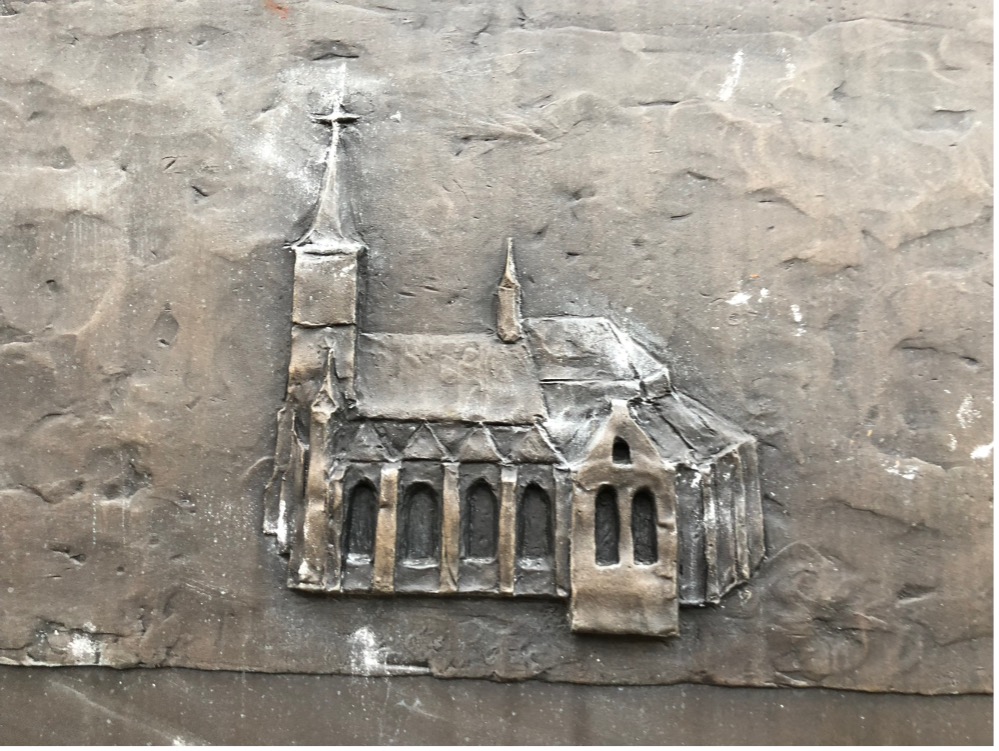
Unlike most of the Separatists who journeyed to Plymouth Colony on the Mayflower, Cooke was a resident of Leiden, in the Netherlands, well before the arrival of a contingent of English Separatists in 1609; Cooke had been living there as early as 1603. Records indicate that he worked as a woolcomber, and one of the leading historians on the Pilgrims has said that Cooke continued to practice that trade at Plymouth up until the day he died. When the Separatists arrived, Cooke was a member of the “Walloon” church in Leiden, known as Vrouwekerk, which was established by members of a Reformed Protestant faith first practiced in what is today a part of Belgium (Wallonia, to be precise). Some historians have speculated that Cooke was actually a Huguenot from France, but the records are not entirely clear; his name was sometimes spelled as if he was French. Francis’ wife, Hester Mahieu, was clearly from France; she and her family were from Lille, just south of the border between France and Belgium. They married in 1603 in Leiden at the Walloon church, the ruins of which are still there. A plaque honoring the Walloons (pictured below) is affixed to one of the walls of the ruin, and states that in the 17th century the church had as many as 6,000 congregants. The plaque also makes specific reference to “Francois Coucke” and his wife Hester, suggestive that he was indeed French.
RUINS OF VROUWEKERK, THE LEIDEN CHURCH WHERE FRANCIS & HESTER COOKE WERE MARRIED
At some point after Francis and Hester married, they moved to Norwich, England, where they attended the Walloon church there, but they had returned to Leiden by 1608, the year before the English Separatists arrived. Records suggest that the Cookes did not immediately join the Separatist church, but did so at some point after 1611.
At Plymouth, Francis was a leading member of the community. He was a signer of the famous “Mayflower Compact.” He served on a long list of committees, as well as serving on the petit jury, the grand jury, and the coroner’s jury at various times between 1637 and 1648. He served in the military, his name appearing on the list of “men able to bear arms” in 1643 (at his death, he owned at least two muskets). He also was one of the Colony’s “Purchasers” who, in 1627, acquired the rights to land distributions in the Colony from the London-based “Merchant Adventurers.” Francis served as a deacon in the Plymouth Colony’s church. Finally, between 1638 and 1655, Francis acquired a number of different plots of land, some of which he deeded to his son Jacob. The first land awarded to him in the early years of the Colony was located between lands awarded to Isaac Allerton and Edward Winslow—two illustrious neighbors to have, to be sure.
Together, Francis and Hester had seven children, including two sons who later became active in Plymouth Colony and inter-married with the daughters of two other Mayflower passengers, Richard Warren and Stephen Hopkins. Two of Francis’ daughters were born in Plymouth, Hester and Mary. When Francis came to Plymouth on the Mayflower, only his 14-year-old son John had accompanied him; his other family members came in 1623 on the Anne, just in time for the Colony’s 1623 Division of Land that awarded Francis a number of acres of land allocated to his wife and three children.
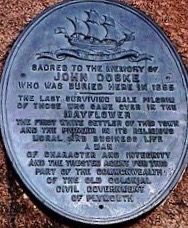
Francis’ eldest son John (baptized in 1607 in Leiden) married Sarah Warren, daughter of Mayflower passenger Richard Warren, in 1634. Together they had five daughters. Sadly, religion came between him and the leaders of the Colony when, in the 1640’s he was accused of being a troublemaker in the church, and he was banished. The family moved to Dartmouth, where he died in 1695 at the age of about 89. A plaque honoring his memory was erected at Cooke Memorial Park in Fairhaven, Massachusetts, where he is buried. It reads in part that John was “a man of character and integrity and the trusted agent for this part of the commonwealth of the old colonial civil government of Plymouth.
PLAQUE TO THE MEMORY OF JOHN COOKE, SON OF FRANCIS & HESTER COOKE; ‘THE LAST SURVIVING MALE PILGRIM,” WHO DIED NOVEMBER 23, 1695
John and Sarah were married for sixty-one years. Sarah must have moved back to Plymouth after John died; she passed away in Plymouth sometime after July 15, 1696. So today we honor the memory of Francis Cooke, who died this day in 1663. He who served the people of Plymouth Colony for over forty years, and left a lasting legacy.