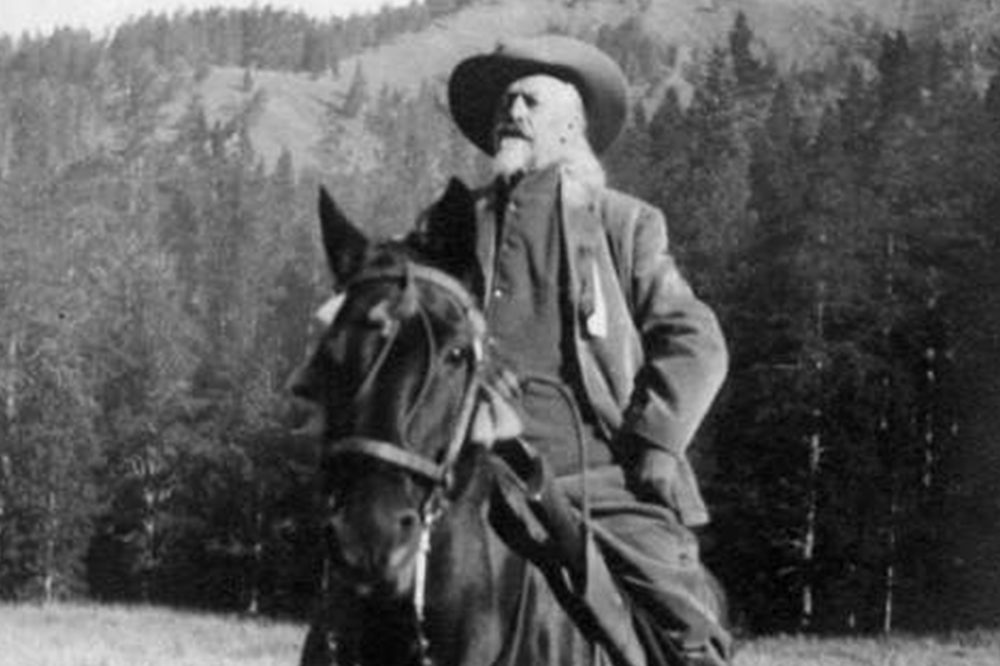
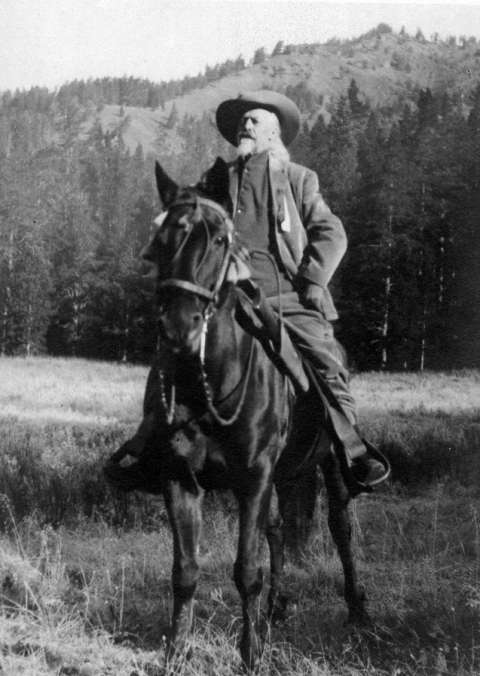
Buffalo Bill, born William Frederick Cody on this date in 1846, was an American soldier, bison hunter, and showman who became one of the most famous figures of the American West. He earned the nickname “Buffalo Bill” after hunting thousands of bison to help feed railroad workers building the Kansas Pacific Railway. During his early life, Cody worked as a Pony Express rider at age 15, served in the Union Army during the Civil War, and later acted as a scout for the U.S. Army during the Indian Wars. He was awarded the Medal of Honor in 1872, but was one of 911 recipients who had the medal rescinded in 1917 when Congress instituted a hierarchy of medals. Congress reinstated the medal for Cody and four other recipients in 1989. His adventures, some exaggerated by dime novels and newspapers, helped create his larger-than-life reputation.
Cody is best known for creating Buffalo Bill’s Wild West, a traveling show that began in 1883. The spectacle featured sharpshooting, staged battles, rodeo events, and reenactments of frontier life. Performers included famous figures such as sharpshooter Annie Oakley and Native American leader Sitting Bull. The show toured across the United States and Europe, even performing for royalty, and played a major role in shaping how audiences around the world imagined the American frontier.
Although Buffalo Bill’s performances often dramatized and romanticized the West, they left a lasting cultural legacy. His show blended entertainment with storytelling, turning real historical events into popular myth. Today, Buffalo Bill remains a symbol of the frontier era—both admired for his showmanship and examined critically for how his portrayals influenced perceptions of Native Americans and western expansion. Cody died on January 10, 1917 and is buried on Lookout Mountain in Golden, Colorado.