Between 1865 and 1869, over 12,000 Chinese laborers were instrumental in building the Central Pacific Railroad through the Sierra Nevada mountains. Recruited largely from southern China, these workers fled poverty and unrest, arriving in California during and after the Gold Rush. Initially met with skepticism, they soon proved indispensable, comprising up to 90% of the Central Pacific’s workforce.
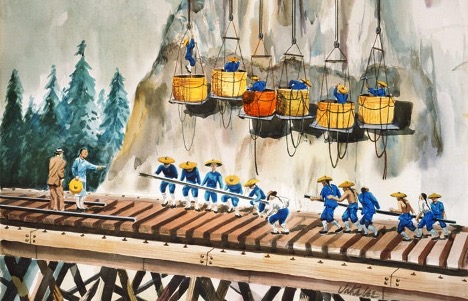
Their work was grueling and dangerous. To carve tunnels through granite, Chinese crews used black powder and nitroglycerin, often suspended in baskets over cliffs to drill holes by hand. The most famous feat was the Summit Tunnel near Donner Pass, a 1,659-foot passage completed over two years in freezing conditions and deep snow.
Chinese laborers also built retaining walls, laid track, and constructed trestles across ravines. They lived in segregated camps, cooked traditional meals, and maintained strong communal ties. Despite their contributions, they were paid less than white workers and excluded from public recognition, including the 1869 Golden Spike ceremony at Promontory Summit.
Many died from avalanches, explosions, and accidents, yet their perseverance enabled the railroad’s completion. Their labor helped unite the continent, opening the West to commerce and migration.
Only in recent decades have historians and institutions begun to acknowledge their legacy. In 2014, the U.S. Department of Labor honored Chinese railroad workers for their role in transforming America’s infrastructure. Their story is one of resilience, sacrifice, and enduring impact—an essential chapter in the history of the American West.