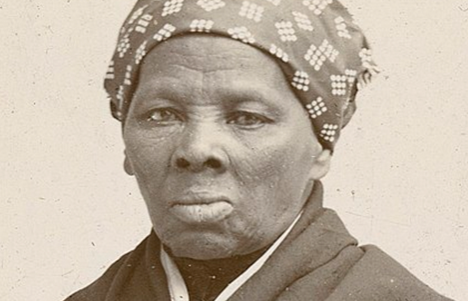
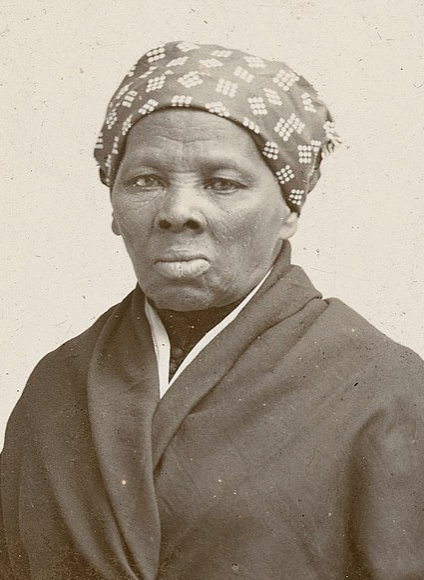
One of the most revered figures in the history of the abolitionist movement in the 19th century was Harriet Tubman, who died this day on March 10, 1913 at the age of 90.
Harriet’s story is inspirational– an escaped slave who rose to prominence in the 1850’s and became one of the greatest civil rights advocates in the country. She was an active participant in the “Underground Railroad” that helped escaped slaves find freedom in the North. She was able to support herself (barely) with help from the wide circle of admirers who became aware of her impoverished condition, and came to her aid. Her perseverance was ultimately rewarded when the 13th Amendment to the U.S. Constitution was finally ratified in December 1865, and slavery was officially outlawed in the United States.
Harriet’s life before becoming an abolitionist was one of hardship and physical trauma. She is believed to have been born in Maryland in about March, 1822. During her years of enslavement, she is said to have been subjected to harsh treatment by her white masters, and was severely beaten on several occasions, from which she suffered various physical ailments for the rest of her life. She was put to work at about age six, and sometimes was compelled to work while sick—including working in the fields, hauling logs, and other work requiring extreme physical exertions. From all of these experiences, she became deeply religious. Her faith was a major part of her adult life, and she claimed that she spoke often with God to receive His divine guidance.
In 1844 Harriet married her first husband, John Tubman, and took his name. Even though married, she was still enslaved, so in 1849 she decided to escape, and found her way to Philadelphia. Sadly, her husband John—even though he was a free black man—refused to join her, having married another woman during her absence. This was the end of her marriage, and the beginning of her activist years of the 1850’s. Harriet became the de facto leader of the Underground Railroad, and poured all her energies into the task of leading escaped slaves to freedom; she was never caught. Her last mission in 1860 was to rescue her sister, but having learned that her sister was dead, Harriet helped another group of slaves escape instead. Years later she said that “I never ran my train off the track and I never lost a passenger.” Harriet was outspoken in her support for emancipation, and repeatedly challenged President Abraham Lincoln to free the slaves. She openly criticized Lincoln when he didn’t go as far as she wanted him to, and was quoted as saying that “God won’t let master Lincoln beat the South till he does the right thing…. He can do it by setting the negro free.”
After the Civil War ended, Harriet met and married her second husband, Nelson Davis, and they adopted a daughter. In 1869, a biography of her life was published, “Scenes in the Life of Harriet Tubman.” Not content to sit still and enjoy married life, however, Harriet got involved in the women’s suffrage movement, which further enhanced her stature as a civil rights activist. But it also contributed to her declining health, and by 1911 she was placed in a rest home in Auburn, New York that she had helped organize; it was named the “Harriet Tubman Home for the Aged.” She died there on March 10, 1913, and is buried nearby at the Fort Hill Cemetery in Auburn.
So today we honor Harriet Tubman—one of the greatest civil rights advocates in American history.